
Views: 0 Author: Site Editor Publish Time: 2026-06-10 Origin: Site


Modern architecture demands materials offering robust security alongside visual lightness. Traditional fencing often falls short for high-end commercial projects. You no longer have to compromise design intent to achieve structural safety. Buyers frequently face a frustrating dilemma during initial project planning. You need strict safety compliance for fall protection and heavy structural loads. However, you also want high transparency and excellent natural airflow. Many conventional barrier materials block sightlines completely. Others succumb rapidly to long-term environmental corrosion. Specifying a high-tensile, architectural-grade solution solves these overlapping challenges beautifully. This guide explores how engineers, architects, and facility managers evaluate these complex wire systems. You will learn the exact manufacturing differences driving correct product selection. We will cover critical compliance drivers across major commercial applications. Finally, we provide actionable criteria to specify custom deployments effectively.
Stainless steel cable mesh combines extreme tensile strength with flexibility, acting as both a structural barrier and an architectural feature.
Selection strictly depends on matching material grades (Type 304 vs. 316) to environmental exposure (e.g., marine vs. indoor).
Specifying the correct mesh relies on two primary variables: cable diameter and aperture (hole) size, which dictate load capacity and flexibility.
Procurement typically requires custom, by-the-meter fabrication to ensure accurate edge tensioning and minimize on-site cutting risks.
Manufacturers produce these structural barriers using two distinct engineering methods. Each method serves completely different architectural requirements. You must understand how they behave under physical stress.
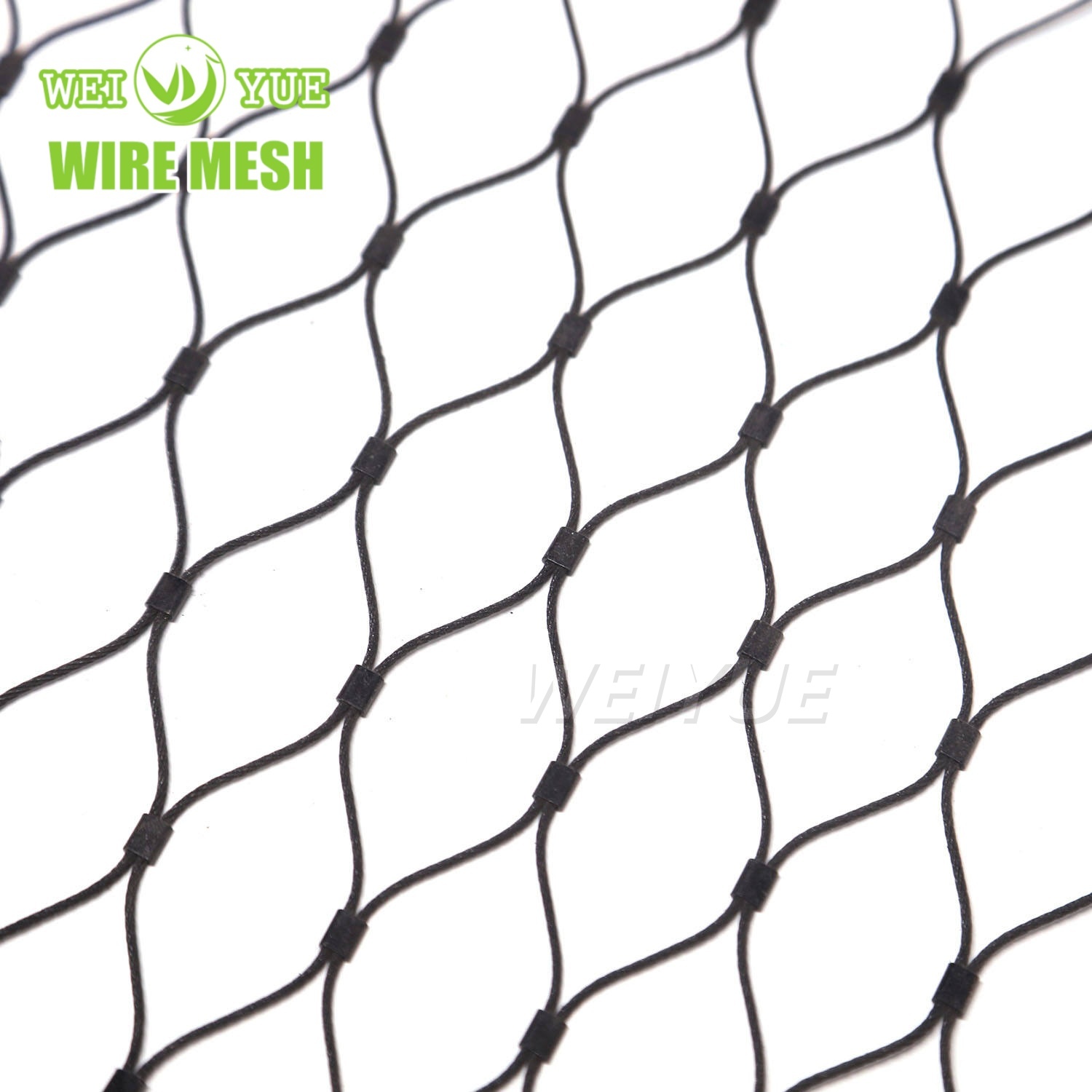
Woven or knotted assemblies feature cables interlaced directly into one another. This specific assembly provides exceptional high-impact absorption. It offers multi-directional flexibility under heavy dynamic loads. Designers frequently specify this style for complex zoo enclosures or playground safety nets. Industry professionals often refer to this woven variant as a stainless steel rope net. The interwoven design handles forceful animal strikes or human impacts effectively without snapping.
Conversely, ferruled designs utilize seamless metal sleeves. These small ferrules consist of specialized stainless steel or tinned copper. They join the crossing cables securely at each intersection point. This clamping method creates highly rigid geometric aesthetics. You will commonly see ferruled options on sleek architectural facades. They also serve perfectly as minimalist balustrade infills. What to watch out for: poorly crimped ferrules will slip under tension. Always demand machine-swaged ferrules for structural applications.
Choosing the correct metal alloy determines long-term structural integrity. You must match the material grade directly to environmental exposure risks. Overlooking this step guarantees premature project failure.
Type 304 acts as the standard commercial grade across the industry. It provides sufficient corrosion protection for dry, indoor spaces. You can also deploy it safely for non-coastal outdoor applications. It offers excellent value for controlled environmental conditions.
Type 316 represents the premium marine-grade standard. It contains added molybdenum for superior chloride resistance. You must mandate Type 316 for any coastal building areas. Chemical exposure zones and highly corrosive industrial environments strictly require it. Downgrading to 304 in these aggressive settings causes rapid structural deterioration. Visual "tea-staining" will appear first, followed by deep material pitting.
Building designers frequently replace traditional glass panels or vertical metal rails. They utilize flexible tensioned systems instead to maximize visibility. The primary goal centers entirely on meeting strict local building codes. Inspectors evaluate these high-altitude installations on strict anti-climb capabilities. The mesh apertures must prevent small children from gaining footholds.
Assessors also measure lateral load deflection limits rigorously. Proper tensioning prevents heavy pedestrians from pushing through the barrier. It secures elevated walkways safely while maintaining unobstructed sightlines. Compliance with International Building Code (IBC) standards remains mandatory here.
Modern commercial facades utilize these tensioned grids creatively. They act as a robust framework for heavy climbing plants. They also serve as standalone aesthetic building cladding. Engineers evaluate these vertical applications on their weight-to-coverage ratio. A massive stainless steel cable mesh installation remains remarkably lightweight.
Wind load permeability acts as a critical compliance driver. High winds pass right through the open wire apertures easily. This physical characteristic reduces the dangerous structural strain placed on the primary building skeleton. Solid panels would act like sails, causing severe structural damage.
Zoological facilities must secure vast perimeters without obstructing visitor lines of sight. Wire mesh achieves this delicate balance flawlessly. Safety assessors evaluate these structures based on severe chew-resistance. Large predators possess immense jaw strength requiring thick cable diameters.
Engineers calculate impact distribution upon forceful animal strikes. The flexible material absorbs and dissipates kinetic energy across the entire panel. The material supports massive span capabilities. Planners can design huge aviary spaces without intermediate support posts. This maximizes internal usable flight volume perfectly.
You must understand the inverse relationship between these two critical variables. Smaller apertures paired with thicker cables increase structural rigidity significantly. This combination also drives up overall manufacturing costs. Larger apertures increase visual transparency and panel flexibility.
Standard cable diameters typically range from 1.2mm to 3.2mm. Aperture sizes generally span from 20mm up to 200mm. Selecting the precise ratio determines project success. A common mistake is ordering apertures too large for the required safety code.
Typical Specification Parameters by Application | |||
Application Scenario | Recommended Cable Diameter | Standard Aperture Size | Primary Code Focus |
|---|---|---|---|
Balustrade Infill | 1.5mm - 2.0mm | 40mm - 60mm | Anti-climb & Lateral Load |
Large Zoo Enclosures | 2.4mm - 3.2mm | 50mm - 100mm | Impact & Chew Resistance |
Green Wall Framework | 1.5mm - 2.4mm | 100mm - 200mm | Wind Permeability |
Aviary Roof Nets | 1.2mm - 1.5mm | 25mm - 40mm | Lightweight Spanning |
Verifying manufacturer break-load testing remains an absolute project necessity. Do not rely on casual supplier estimates. You must require verifiable specification sheets before purchasing. Demand official documentation detailing exact kilonewton (kN) destruction limits.
These tested limits must align precisely with your project engineering requirements. Subpar materials will tear under unexpected dynamic loads. Authentic testing data ensures long-term public safety. Reputable manufacturers perform destructive testing regularly to guarantee baseline metrics.
Procurement realities often surprise first-time material buyers. Standard bulk rolls certainly exist in the global marketplace. However, custom-made, by-the-meter panels offer far better field results. Pre-finished edge terminations drastically reduce catastrophic installation failure.
Factory finishing also lowers on-site labor costs significantly. Custom panels arrive completely ready for immediate perimeter tensioning. You bypass the tedious process of measuring and binding raw edges manually.
This material relies entirely on constant continuous tension. It possesses zero rigid structural strength alone. The perimeter framework must bear extreme multi-directional forces. Tubular heavy steel or thick rigid cables typically form this outer border.
Engineers must design this rigid frame to withstand immense inward pulling forces. A weak steel frame will buckle inward under the tensioned mesh. You must account for seasonal thermal expansion and contraction as well. The anchor points require heavy-duty welding or through-bolt fastening.
Improper tensioning causes highly uneven load distribution. It creates an unattractive visual "sagging" effect across the installed panel. A well-executed installation demands specialized, high-grade rigging hardware.
You will need several specific hardware components to succeed:
Heavy-duty turnbuckles for adjustable, incremental tension control.
Stainless steel eye bolts for secure, permanent frame attachment.
Specialized edge-lacing cables for seamless perimeter border integration.
Hydraulic swaging tools for terminating internal wire rope connections safely.
Skipping proper rigging hardware leads to inevitable system failure. Hand-tightening alone never achieves the required tension metrics.
We strongly caution against planning extensive on-site cutting operations. Modifying finished panels in the field alters internal tension dynamics severely. The braided material risks unraveling quickly upon being sliced. You must clamp and swage cut edges immediately to prevent fraying.
Precision factory fabrication always outperforms hasty on-site alterations. Try to order exact geometrical dimensions whenever humanly possible. If field adjustments are mandatory, hire experienced riggers equipped with correct tools.
You must demand certified mill test reports from your chosen supplier. These official documents prove genuine 304 or 316 chemical composition. Fraudulent global suppliers occasionally substitute low-grade, cheaper steel alloys. These inferior metals will prematurely rust shortly after installation.
Proper material traceability protects your massive project investment. Ensure the manufacturer holds recognized quality standards like ISO 9001. A trustworthy vendor gladly provides these certificates upon your initial request.
A premium wire supplier provides much more than raw metal. Assess their dedicated technical support capabilities thoroughly before signing contracts.
Look for these essential value-added manufacturing services:
Generation of CAD-assisted panel drawings for architectural review.
Production of complex custom geometries like rhombuses or angled triangles.
Exact dimensional manufacturing matching your structural framing plans perfectly.
Pre-installed ferrule edge terminations for rapid field deployment.
Take deliberate next steps to secure your premium materials. Request physical metal samples for final aesthetic architect approval. Finalize your specific aperture and diameter ratios carefully. Consult professional structural engineers to confirm baseline load tolerances.
Finally, submit your exact perimeter dimensions for highly accurate quoting. Clear technical communication ensures flawless manufacturing outcomes. Rushing the specification phase always causes expensive delays.
Specify your wire materials based on verified hard engineering data. This robust system acts as an engineered structural component, not a cheap commoditized product. Prioritize strict material grade verification to ensure long-term environmental durability. Engage structural engineers early to calculate precise perimeter frame pull loads accurately. Partner exclusively with technical suppliers offering pre-finished, exact-dimension custom fabrication.
Successful commercial deployment demands flawless, precise tensioning execution. Protect your project timeline and budget by avoiding on-site cutting entirely. We encourage engineering and design teams to gather exact project dimensions today. Reach out to a verified manufacturer to request a custom specification review or a physical material sample.
A: Prices generally range from $10 to $120 per square meter. The total cost fluctuates based on your specific cable diameter and aperture size. Upgrading to marine-grade Type 316 naturally increases the baseline price. Requesting complex custom panel geometries also adds to the total manufacturing expense.
A: While technically possible, on-site cutting presents severe installation risks. Slicing the tight cables releases built-up tension immediately. The entire wire panel may unravel if you do not clamp it properly. We strongly prefer ordering factory-finished edges to maintain structural integrity.
A: Surface tea-staining can occur in harsh environments, but deep structural corrosion remains rare if specified correctly. Choosing a Type 316 grade is absolutely mandatory for coastal or industrial areas. Type 316 contains added molybdenum, preventing destructive chloride-induced rust permanently.
A: Maximum architectural spans depend heavily on cable thickness, tension hardware, and local wind loads. Some advanced designs achieve continuous unsupported spans exceeding 20 meters. However, you must always consult a licensed structural engineer to calculate safe deflection limits.


