Views: 0 Author: Site Editor Publish Time: 2026-06-09 Origin: Site


A commercial green wall is only as viable as its underlying support structure. Failing to specify the correct load-bearing matrix leads to structural sagging. It often causes facade damage and necessitates costly remediation. Architects and developers frequently evaluate plant species and irrigation systems first. However, the physical mesh dictates thermal performance, maintenance frequency, and overall installation lifespan. We see many beautiful botanical concepts fail because designers overlook the foundational support framework.
Selecting the right stainless steel cable mesh requires balancing tensile strength, environmental exposure, and botanical load. This guide breaks down essential technical specifications for commercial decision-makers. You will learn how to evaluate specific alloy grades for your climate. We will also explore structural designs and show you how to match mesh dimensions directly to your climbing plants.
TCO vs. Initial Price: Stainless steel mesh typically reaches ROI break-even at Year 4 compared to galvanized or synthetic alternatives, yielding a 30+ year functional lifespan.
Material Grades: Standard inland projects require Type 304, while coastal or high-pollution environments strictly demand Type 316 (with 2-3% Molybdenum) for salt and acid resistance.
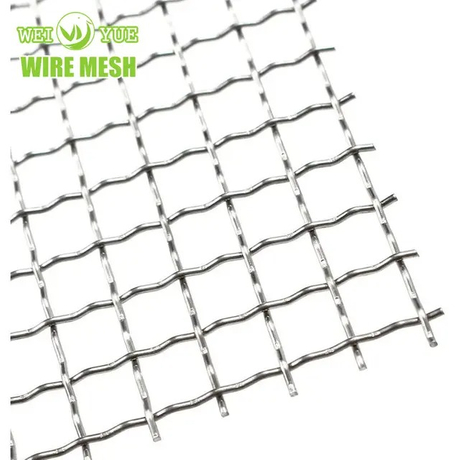
Construction Types: Ferrule (buckle) mesh offers distinct architectural geometry and rigidity, whereas hand-woven mesh provides maximum flexibility and unbroken "see-through" sightlines.
Critical Sizing: Proper specification relies on matching wire gauge (3/64″ to 1/8″) and aperture size (1″x1″ to 4″x4″) to the specific climbing mechanisms of the chosen plant life.
Many projects rely on cheap barriers initially. This decision introduces significant performance risks. Galvanized steel and plastic netting frequently fail in commercial environments. Galvanized wire relies entirely on a sacrificial zinc layer. Acidic rain and urban pollution deplete this coating steadily over time. Once the protective zinc disappears, rust sets in rapidly. Total structural collapse becomes inevitable.
Synthetic netting introduces different environmental hazards. Nylon and plastic alternatives suffer heavily from UV photodegradation. Prolonged sunlight exposure turns them brittle. They eventually shatter under tension. Furthermore, degrading plastics shed harmful microplastics into the surrounding soil. Rodents also frequently chew through synthetic strands. This pest damage compromises entire living walls overnight.
You need a reliable, permanent structural solution. Stainless steel maintains an incredible self-healing mechanism. It contains high levels of chromium. Chromium interacts naturally with atmospheric oxygen. This chemical reaction forms a microscopic, protective passivation layer. It acts like an invisible shield against corrosion. This layer maintains the fatigue life of the metal. It preserves vital "tensile memory" against extreme wind forces and heavy botanical weights.
Selecting the proper alloy grade ensures your framework survives local weather conditions. We primarily evaluate two austenitic grades for outdoor architectural projects. Understanding their chemical differences prevents premature structural failure.
Type 304 serves as the standard baseline material. It contains roughly 18% chromium and 8% nickel. It performs exceptionally well in standard urban environments. You can safely specify Type 304 for suburban outdoor installations. It works best where extreme chemical exposure remains unlikely.
Type 316 represents the extreme environment standard. It contains 16-18% chromium and 10-14% nickel. Crucially, it includes 2-3% Molybdenum. Molybdenum dramatically increases the metal's resistance to pitting and crevice corrosion. This specific element makes Type 316 vastly superior for harsh climates.
You must use a strict decision matrix when specifying materials. Demand Type 316 for any green wall cable mesh near marine environments. Coastal salt spray destroys standard alloys rapidly. Type 316 also excels in heavy industrial zones facing acidic exposure. Use it in any geographic area requiring aggressive chemical cleaning.
Alloy Grade | Key Elements | Primary Strengths | Ideal Deployment Environment |
|---|---|---|---|
Type 304 | 18% Cr, 8% Ni | Excellent baseline corrosion resistance, high tensile strength. | Standard urban, suburban, inland outdoor spaces. |
Type 316 | 16-18% Cr, 10-14% Ni, 2-3% Mo | Maximum resistance to chlorides, salts, and industrial acids. | Coastal regions, marine environments, heavy industrial zones. |
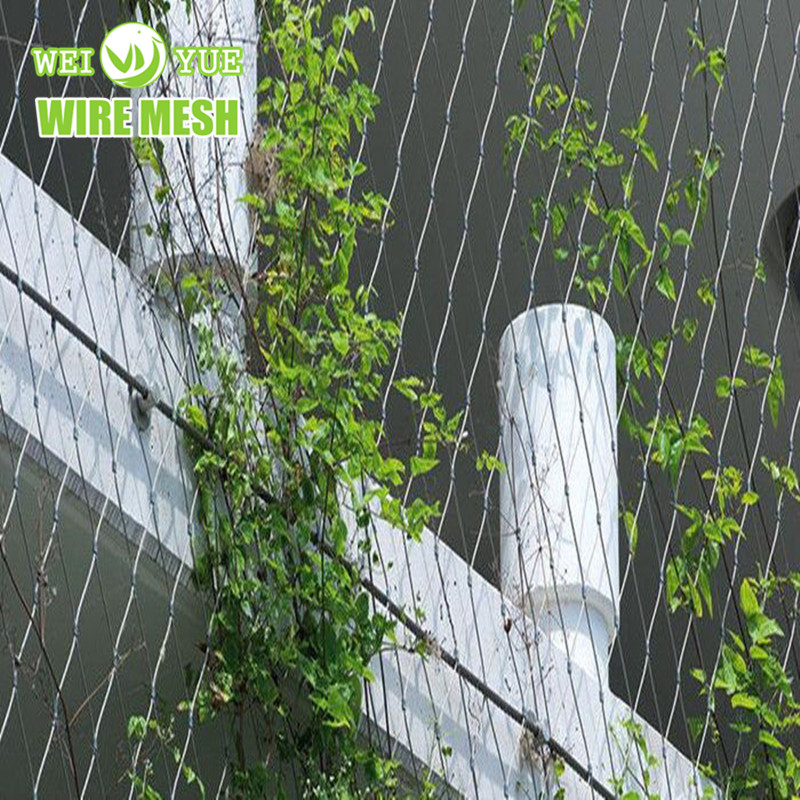
Architects must choose between two primary manufacturing techniques. Each style offers unique structural advantages. Your choice dictates both the installation process and the final visual aesthetic.
Hand-woven cable mesh relies strictly on interlocking wire ropes. It features no secondary fasteners or metal clips. The cables simply twist through each other seamlessly. This construction provides extreme flexibility. It suits complex, curving facades perfectly. Woven mesh also delivers maximum visual transparency. It offers an unbroken "see-through" effect. You hardly notice the wire matrix behind the climbing foliage.
Ferrule cable mesh uses seamless stainless steel sleeves. Industry professionals call these sleeves ferrules. They clamp the crossing cables securely together at specific intervals. You can specify closed rigid ferrules or open variants for easier installation. Ferrule mesh acts as the industry standard for flat building facades. It creates highly rigid, geometric architectural lines.
Common Mistake: Many designers misunderstand how manufacturers measure these products. They standardly measure ferrule mesh apertures under full tension. The proper measurement occurs at a 60-degree angle. This exact tension creates a precise diamond shape across the entire architectural panel.
Plant selection heavily influences your hardware specifications. A fragile vine requires vastly different support than a heavy woody climber. You must balance wire thickness against aperture openings.
Wire gauge dictates the overall breaking strength of your support system.
Lightweight vines and delicate tendrils: These species typically need 3/64″ to 1/16″ gauges.
Heavy woody climbers: These demand robust structural support. Use 3/32″ to 1/8″ gauges. High wind-load geographic areas also strictly require these thicker cables.
Aperture sizing controls how plants grip the structure as they grow.
Small apertures (1″ x 1″ to 2″ x 2″): They serve dense, slow-growing plants perfectly. These plant species require frequent, tight gripping points to climb upward safely.
Large apertures (3″ x 3″ to 4″ x 4″): They suit aggressive twiners beautifully. Use them for large-scale architectural spans. They work exceptionally well when building daylight penetration remains a priority.
Botanical Load Specification Chart | ||
Plant Classification | Recommended Wire Gauge | Recommended Aperture Size |
|---|---|---|
Delicate Vines / Tendril Climbers | 3/64″ – 1/16″ | 1″ x 1″ – 2″ x 2″ |
Medium Twiners | 1/16″ – 3/32″ | 2″ x 2″ – 3″ x 3″ |
Heavy Woody Climbers / High Wind Load | 3/32″ – 1/8″ | 3″ x 3″ – 4″ x 4″ |
Appropriately sized mesh provides several secondary building benefits. It creates a deliberate air gap between foliage and the exterior facade. This spatial gap contributes directly to thermal regulation. It offers essential summer shading and enables winter solar gain when deciduous plants drop leaves. A properly tensioned green facade also acts as an extremely effective anti-graffiti barrier.
A successful living wall requires precise hardware execution. We recommend a strict rollout process centered entirely on structural integrity.
Preparation and Tracing: Align your primary anchor points directly to load-bearing wall studs. Never anchor heavy botanical installations simply to exterior decorative cladding.
Frame Mounting: Secure the perimeter standoffs firmly into the wall. Install the heavy outer wire rope borders first.
Top-Down Suspension: Hang your mesh sheet from the top border. Utilize gravity to help align the entire metal sheet smoothly downward.
Progressive Tensioning: Use heavy-duty zip ties temporarily during alignment. Then secure everything tightly using stainless steel clips. Apply tension evenly across the grid to prevent localized sagging.
Trimming: Cut off any excess perimeter cable carefully. Cap the raw metal ends immediately to prevent wire fraying and potential worker injury.
Best Practice: Always avoid under-tensioning during final installation. Loose wire matrices allow severe wind-whip during storms. Wind-whip damages fragile plant root systems rapidly. It also causes the loose metal to scrape aggressively against the building facade. Proper tension ensures the matrix acts exactly like a tight trampoline. It absorbs kinetic impact safely and springs back into place.
Procuring high-quality architectural components demands rigorous supplier vetting. You must verify vendor manufacturing claims before committing to any bulk commercial orders.
Require all potential suppliers to provide verifiable ISO 9001 certification. They must also demonstrate strict adherence to ASTM material standards. This specific compliance ensures consistent manufacturing quality across large production batches.
Trust your selected vendors, but always verify their raw materials. Request official Mill Test Certificates (MTC) for all shipments. These laboratory documents guarantee the stated percentages of elemental compounds. They definitively prove the presence of crucial Molybdenum in Type 316 stainless products.
Implement a smart material procurement strategy. Decision-makers should always request physical samples prior to bulk orders. Reputable B2B suppliers typically understand this engineering necessity. They frequently offer deductible freight costs for samples on the final purchase order. Testing a physical sample lets you evaluate tension capacity, bending flexibility, and aesthetic fit directly on site.
Choosing a durable support structure represents a critical structural engineering choice. The superior durability offsets initial premiums by providing extreme structural safety. You gain a highly reliable system that safely supports massive botanical weights.
First, finalize your exact plant selection. This step determines your expected botanical and wind load parameters. Next, select either Type 304 or Type 316 based purely on site geography and marine proximity. Finally, request an engineered sample from a certified B2B supplier. Test this hardware locally to ensure proper tensioning capabilities and architectural alignment.
A: A properly tensioned 304 or 316 stainless mesh will reliably exceed 30 years with virtually zero structural maintenance.
A: Yes. Unlike rigid trellises, cable mesh has high fatigue life and acts similarly to a spring, absorbing impact and accommodating temperature fluctuations (-40°C to 400°C) without losing its tensile memory.
A: No. The material naturally forms a protective chromium oxide passivation layer when exposed to oxygen, making it an entirely eco-friendly, chemical-free support structure.
A: Measure the total surface area and define the stand-off distance from the wall. Always order mesh slightly larger than the precise frame dimensions to allow for proper corner tensioning and trimming.