
Views: 0 Author: Site Editor Publish Time: 2026-08-31 Origin: Site


Ultra fine stainless steel filter mesh can provide reliable service only when it is cleaned, handled, inspected, and replaced with the same care used to select it. Fine woven cloth has many small openings and thin wires. A deposit can reduce its effective open area; an aggressive cleaning tool can bend wires, tear the weave, or enlarge openings; a poorly dried element can introduce moisture or residues into the next batch. The best maintenance routine is therefore a controlled process based on the retained material, mesh construction, finished filter design, and the site’s safety and quality requirements.
Establish the contamination type and cleaning objective before choosing a cleaning method.
Use the least aggressive effective method; physical force that removes deposits may also damage fine wire cloth.
Verify cleaning with flow, pressure, visual inspection, and process-specific cleanliness criteria—not appearance alone.
Inspect mesh, seams, supports, edges, frames, and gaskets before return to service.
A screen may need cleaning because of pressure increase, reduced flow, visible residue, a quality deviation, a scheduled changeover, or a preventive-maintenance interval. These triggers are not equivalent. A normal scheduled rinse may need a simple approved procedure; a sudden throughput loss may require an investigation into blinding, feed changes, damaged cloth, or an equipment issue.
Identify the retained material. Is it brittle particulate, viscous product, fibre, gel, crystallised salt, polymer, oil, powder, or a mixed deposit? Does it dissolve in a compatible approved liquid, loosen with a controlled rinse, or require a validated detergent? Does the material present a safety, allergen, cross-contamination, or environmental hazard? The answers determine both cleaning method and waste handling. Never begin with a generic solvent or brush simply because it worked on a different filter.
Maintenance starts at installation. Fit the element so it is supported correctly, protected from rubbing, and not distorted by clamps or an uneven seat. Verify that the flow direction matches the design and that gaskets and supports are in good condition. Record the mesh identification, installation date, lot if required, and baseline clean-flow or pressure data.
Preventive measures reduce the need for aggressive cleaning. Consider upstream coarse protection when large debris is expected; control feed rate where high loading causes sudden cake formation; maintain conditions that prevent unwanted crystallisation or agglomeration; and use a mesh area appropriate to the duty. If a filter repeatedly blinds, treat this as a process-design signal rather than a cleaning failure.
Use the gentlest method that restores validated performance. In many duties, controlled flushing or backflushing is the first option. Reverse flow can dislodge particles caught against the surface, but pressure and duration must be suitable for the construction and support. A loosely supported fine cloth can be damaged by an excessive reverse-pressure pulse.
Soaking or circulating an approved cleaning solution may loosen deposits that cannot be removed by water alone. The solution must be compatible with the stainless grade, joints, gaskets, and the process’s product-contact or chemical-safety requirements. Control concentration, temperature, contact time, and rinse quality. A stronger solution is not necessarily a better solution; it may affect material condition or create a difficult-to-remove residue.
Ultrasonic cleaning can be useful for particular fine-mesh applications when the equipment, solution, and duration have been validated. It is not a universal repair method. Excessive energy, unsupported parts, or unsuitable chemistry can cause problems. Follow a documented procedure and confirm that the complete assembly—not only a loose sample coupon—is suitable for the method.
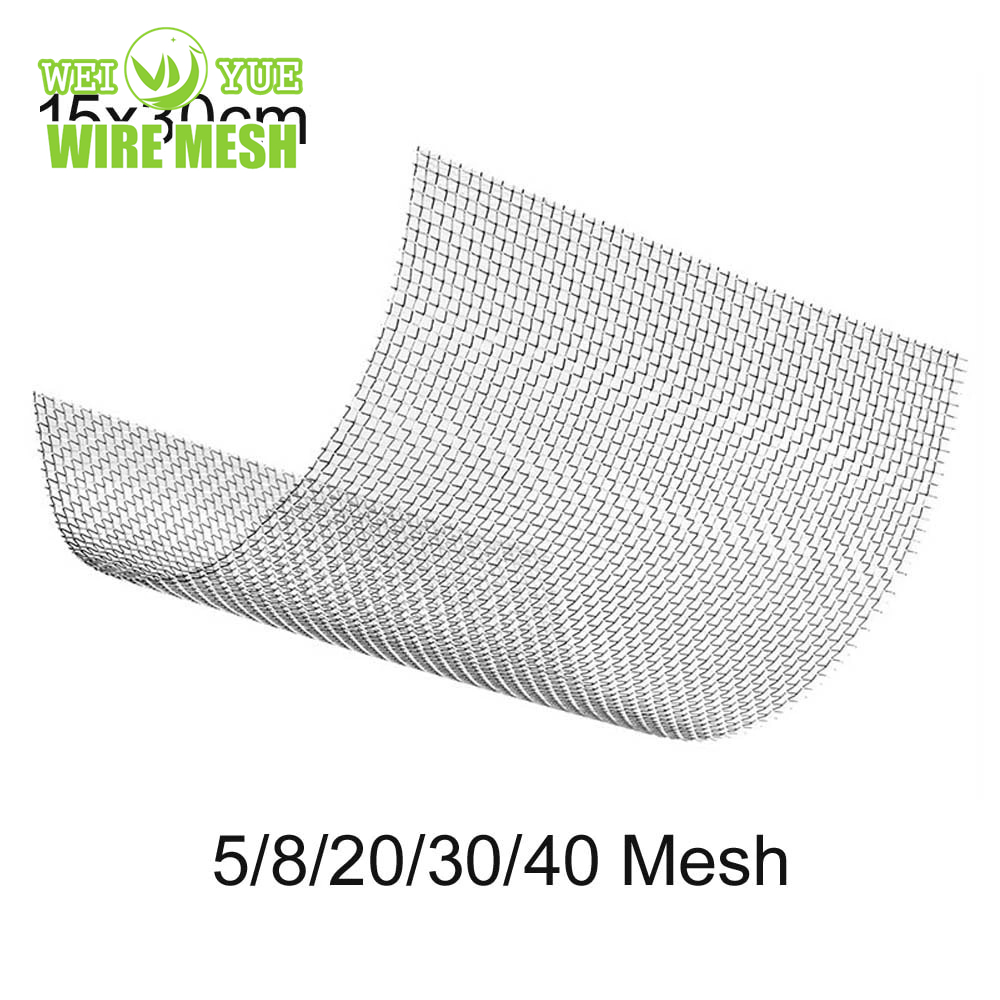
Avoid hard scraping, metal picks, uncontrolled high-pressure jets, and abrasive brushes on ultra fine wire cloth unless a qualified engineering procedure specifically permits them. These methods can nick wires, push debris deeper into openings, stretch the weave, or create damage that is not visible in a quick visual check. Do not fold a mesh disc or lay it on a contaminated workbench. Carry it in a clean protective tray or holder.
Chemical misuse is another risk. Strong acids, chlorinated cleaners, hot solutions, and residues can challenge stainless steel depending on concentration and exposure. Review the exact cleaning chemical with the materials and safety teams. The cleaning environment may be harsher than the production fluid, particularly during a hot wash or an extended shutdown soak.
The exact steps require site approval, but a robust sequence has six stages. First, isolate the filter safely and capture the reason for removal. Second, remove loose product with the approved initial rinse or dry recovery method. Third, apply the validated cleaning method—such as controlled backflush, soak, circulation, or ultrasonic treatment. Fourth, rinse thoroughly to remove cleaner and released debris. Fifth, dry or condition the element as required for the next process. Sixth, inspect and release only if integrity and cleanliness criteria are met.
Each stage should have acceptance criteria. “Looks clean” is not enough for a fine filter. Use measurable observations appropriate to the process: restored flow at a defined test condition, differential-pressure response, weight or residue control, visual inspection under adequate light and magnification, and documented absence of damage. If the filter does not recover, determine whether replacement is needed rather than extending cleaning time indefinitely.
Inspect the active mesh for tears, broken wires, stretched areas, distorted openings, embedded debris, corrosion signs, and local blinding. Inspect edges for fraying and the finished assembly for cracked frames, loose welds, damaged support layers, deformed baskets, worn gaskets, and seal problems. A filter can appear clean while a support failure allows bypass or a distorted section changes its effective opening.
Establish retirement criteria before the first failure. Examples may include a visible tear, broken wire, unrecoverable pressure drop, persistent residue after validated cleaning, loose joint, out-of-tolerance shape, or any condition that affects the critical filtration function. Retire and identify failed elements so that they cannot be returned accidentally to service. Analyse recurring failure modes; frequent damage at one location may reveal poor handling or inadequate support rather than a mesh defect.
Food-processing mesh needs procedures that address hygiene, allergen control, product residues, and approved chemicals. Ensure complete rinsing and drying where required by the process. Chemical-service mesh needs stronger focus on chemical compatibility, worker protection, neutralisation, containment, and disposal. Dry powder screening requires methods that avoid contaminating the powder stream or creating unwanted moisture, and may need controls for static and dust hazards.
The correct procedure is therefore sector-specific. A rinse routine suitable for a water-based food product may be unacceptable for a moisture-sensitive powder. A solvent suitable for one chemical service may be unsafe or incompatible with another. Document the approved method by filter identification and duty, not merely by “stainless mesh.”
Track installation date, run time, pressure or flow trend, cleaning method, cleaner lot where relevant, inspection findings, repairs if allowed, and retirement reason. Simple records reveal whether a screen is loading faster over time, whether a new raw material changes cleaning frequency, or whether a particular operator step correlates with damage.
Use the data to improve the system. If differential pressure rises early, consider more area, staged filtration, feed conditioning, or a review of pore requirement. If cleaning recovery declines, assess deposit chemistry and procedure. If elements fail mechanically, review supports and handling. The goal is not merely to keep the current filter alive; it is to maintain stable separation performance.
Replacement is appropriate when integrity is uncertain, when deposits cannot be removed by the validated method, when the mesh has lost its shape, or when repeated cleaning would risk damage or cross-contamination. Fine mesh is a functional component, not an item that must be preserved at all costs. The cost of an unplanned quality issue can exceed the cost of a replacement element.
For a planned spare strategy, keep the replacement specification complete: material, weave, aperture, wire diameter, active area, finished geometry, support, edge treatment, and inspection requirement. Weiyue offers stainless steel mesh and fabricated filter cylinders; use verified drawings and operating data to ensure a replacement is functionally equivalent to the approved part.
Store cleaned mesh where it is protected from dust, moisture, impact, and contact with incompatible materials. Use a labelled clean container, rack, or tray that supports the finished element without bending the active area. Keep replacement elements in their protective packaging until needed, and separate clean parts from parts awaiting inspection or disposal. If the application has product-contact, allergen, or high-purity controls, the storage method should be included in the written procedure rather than left to individual practice.
Train operators to recognise fine-mesh damage. A small crease, broken edge wire, or local shiny abrasion may be easy to overlook but can matter in a filter with a defined separation duty. Provide good lighting and, where appropriate, magnification. Make it clear that reporting a doubtful element is the correct action; the inspection system should encourage early removal rather than reward continued use of a compromised part.
Review maintenance effectiveness periodically. Compare pressure-drop trends, change-out frequency, cleaning recovery, inspection findings, and product or process deviations over time. A procedure may have been suitable when written but become inadequate after a raw-material change, capacity increase, new cleaning chemical, or different filter geometry. Update it through controlled change management, test the revised method, and retrain personnel before release.
This feedback loop keeps maintenance proportionate. It identifies when a simple rinse is adequate, when a more controlled cleaning step is justified, and when the underlying filtration design needs more active area or staged protection. The most reliable system is one that learns from service history rather than relying on a fixed cleaning habit.
Post a short release checklist at the maintenance point: correct part identity, no visible damage, approved cleaning complete, residue limits met where applicable, fully dry if required, and correct installation orientation. A simple checklist helps ensure that a clean-looking but damaged mesh does not return to service.
Ultra fine stainless steel filter mesh should be maintained through a validated, least-aggressive cleaning routine paired with disciplined inspection. Define what is being removed, use compatible chemistry and controlled force, confirm performance recovery, and retire elements that no longer meet integrity criteria. Weiyue mesh can be incorporated into cleanable or replaceable filter assemblies, but durable performance ultimately depends on the user’s process conditions, handling practices, and maintenance controls.
Usually no. A wire brush can damage thin wires and alter openings. Use it only if an approved, validated procedure specifically permits it for that construction.
It can be, but only when the mesh, finished assembly, solution, duration, and ultrasonic settings have been evaluated and validated.
Use defined acceptance criteria such as restored flow or pressure response, residue limits, visual inspection, and any process-specific hygiene or contamination tests.
The cause may be incomplete deposit removal, internal blinding, distorted cloth, inadequate active area, changed feed conditions, or a system issue. Inspect and investigate rather than simply increasing cleaning force.
No. Remove and retire it according to the quality procedure. Cleaning cannot restore the validated opening or integrity.


