
Views: 0 Author: Site Editor Publish Time: 2026-08-24 Origin: Site


Ultra fine filter mesh is used in food and chemical processing when a robust, precisely specified metal filtration layer is needed to retain unwanted particles, protect equipment, or support a controlled separation step. The same woven stainless steel cloth can look similar in both sectors, but the engineering questions differ. Food processing concentrates on hygiene, cleanability, allergen and foreign-material controls, and product integrity. Chemical processing concentrates on compatibility, temperature, pressure, concentration, and safe containment. In either setting, the mesh must be selected as part of a complete filter assembly and validated in the real process.
Choose the aperture from the particle-control objective, not from a generic “fine mesh” label.
Food applications need hygienic design, validated cleaning, and compliance with the facility’s applicable requirements.
Chemical applications need a complete materials-compatibility review covering process and cleaning exposure.
Finished filter geometry—disc, basket, cylinder, tube, or supported pack—affects flow, cleanability, and inspection.
Woven wire mesh provides a physical barrier with a known construction. In a liquid stream, it may retain particles before a pump, nozzle, filling unit, heat exchanger, analyser, or polishing filter. In a dry or wet powder process, it may control oversize material, remove agglomerates, or protect a downstream step. It can also form part of a multi-layer element where a coarse support layer carries the load and a fine layer supplies the separation function.
The process objective should be written in measurable terms. “Filter the product” is too vague. Better statements are “retain particles above the validated opening before the transfer pump,” “remove visible oversize before blending,” or “protect the downstream membrane from abrasive solids.” Once the objective is clear, the team can determine the necessary aperture, area, alloy, weave, housing, cleaning method, and inspection frequency.
In food applications, filtration equipment must be compatible with the product and with the facility’s hygiene program. The mesh must be accessible or designed for validated cleaning, free from inappropriate crevices or damaged edges, and protected from misuse during handling. A screen that retains product residues can become a sanitation concern even if its micron target is correct.
Specify the product composition, temperature, viscosity, particulate content, cleaning chemicals, sanitising procedure, and maximum time between cleaning and inspection. Confirm whether the element is intended for a single batch, continuous service, or repeated cleaning cycles. Also identify any risks of allergen carryover and whether the filter is dedicated to a product family. The mesh itself is only one component; gaskets, frames, supports, welds, and the housing must fit the same hygienic design philosophy.
Chemical filtration adds a broader range of corrosion and exposure conditions. A liquid that is benign at room temperature can be aggressive at process temperature; a compatible bulk fluid can become troublesome in a stagnant seam or deposit. Cleaning and neutralisation steps may expose the filter to substances different from the primary process chemical.
For chemical service, build a full exposure list: chemicals, concentrations, operating and upset temperatures, pressure, flow, solids, vapours, cleaning agents, and shutdown conditions. Evaluate the filtration layer and every wetted support, frame, seam, and gasket. If the process is safety-critical, use formal materials engineering and trial exposure rather than assumptions based only on a stainless-steel grade name.
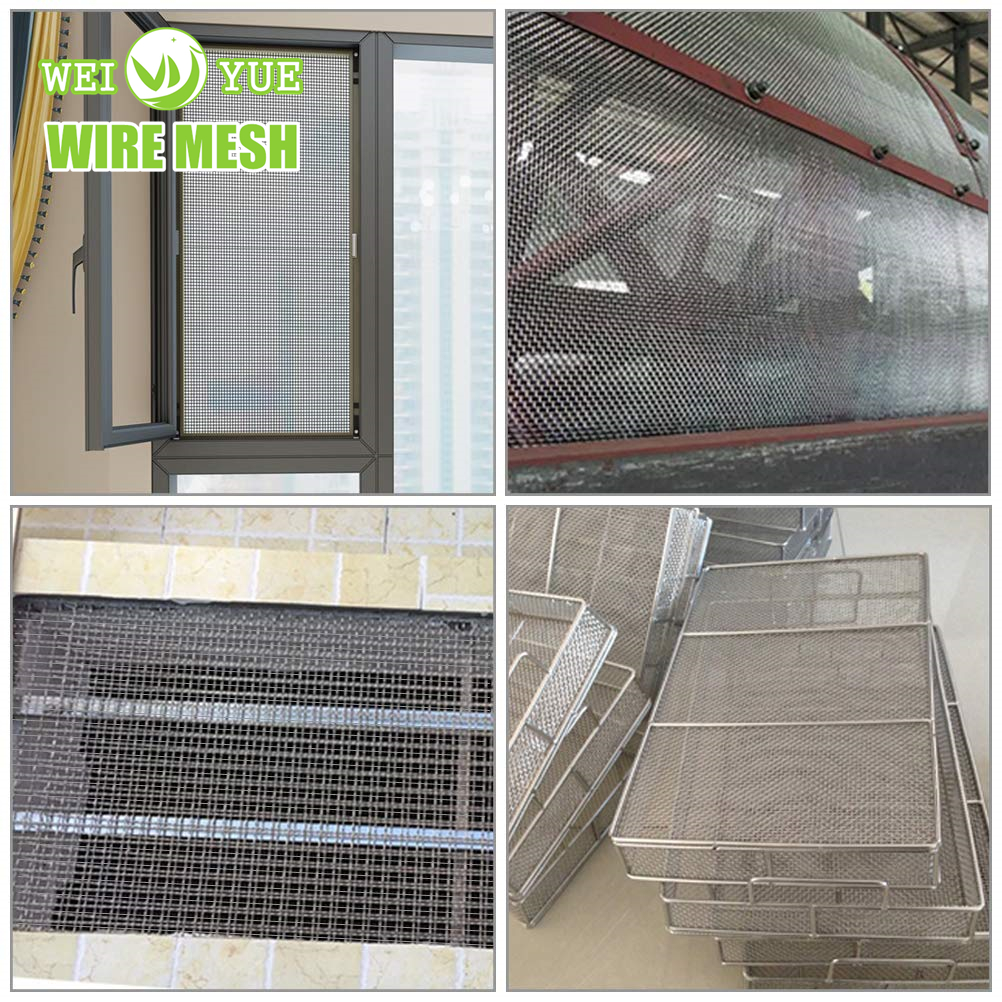
An ultra fine filter mesh might be listed by micron opening, but filtration outcome depends on more than that figure. Particle shape, deformation, agglomeration, flow rate, viscosity, cake formation, and available area all influence retention and pressure loss. In food processing, soft pulp or fibres may bridge an opening differently from hard particles. In chemicals, crystallising solids or polymeric gels may blind a screen quickly even when clean flow is excellent.
Use a representative trial where possible. Record clean flow, pressure drop, loading rate, product quality, retained solids, cleaning recovery, and post-cleaning inspection. If a fine layer plugs quickly, investigate staged filtration, larger active area, revised cleaning, or upstream process control before selecting a coarser mesh that may allow unacceptable particles through.
Plain weave has regular, readily described openings and is often used for screening and straightforward straining. Dutch weaves use a more tightly packed wire relationship, which can create fine filtration pathways and different flow behaviour. The appropriate weave depends on the separation target and the ability to clean and support the cloth.
The finished form changes practical performance. A flat mesh disc can suit a compact holder. A basket offers more area in a strainer body. A cylinder or tube may suit in-line filtration where flow passes from inside to outside or the reverse. A multi-layer assembly can combine a fine filtration layer with structural support. Avoid comparing these forms by micron value alone; compare active area, flow direction, support, seals, and cleanability.
304 stainless steel may be considered for compatible conditions. 316 or 316L may be considered where the environment and fabrication requirements justify it. Neither statement is a compatibility guarantee. The actual choice should account for chloride exposure, acids, alkalis, cleaning cycles, temperature, and deposits.
Fabrication must not compromise the cloth. State required dimensions, flatness or roundness, joint method, edge treatment, support layers, and maximum handling load. For a product-contact or chemical-contact part, the supplier should understand which faces and joints are wetted. Weiyue’s ultra fine 304/316 stainless steel filter mesh can be a starting point for a specification, but final approval should match the user’s process documentation.
Cleaning must remove retained material without damaging fine wires or trapping residues. Establish the approved cleaner, concentration, temperature, contact time, rinse sequence, drying condition, and inspection method. Do not use an aggressive brush or tool merely because it removes visible material; it may distort or fracture fine mesh. If cleaning cannot restore performance reliably, replace the element rather than extending service without evidence.
After cleaning, inspect for tears, distorted openings, loose seams, corrosion signs, residual deposits, and frame damage. Keep records tied to the filter’s identification. This is especially useful when a process sees changing raw materials or different batches, because it makes a trend in pressure drop or cleaning frequency visible before it becomes a quality event.
Define the retained particle and the downstream consequence. Then define the fluid or powder and its worst-case conditions. Select an initial aperture and weave, calculate or estimate the required active area, and choose a compatible material and fabricated form. Validate at normal production conditions and at reasonable upset conditions. Confirm cleaning recovery and inspection criteria. Finally, freeze the specification and control future changes.
This framework is more durable than copying a mesh size from another line. Two products that look similar can have different viscosity, solids, cleaning chemistry, and regulatory requirements. A documented trial gives operations, quality, and procurement teams one shared basis for the decision.
Small mesh samples are useful for confirming construction and discussing particle retention, but they do not reproduce a production filter. The finished assembly may have a smaller active area, flow maldistribution, a support layer, a gasket compression zone, or seams that influence how it loads and cleans. For a meaningful validation, test the intended geometry at a representative flow rate, temperature, solids concentration, and cleaning condition.
Collect data before and after the test. Relevant observations include initial differential pressure, time to the defined pressure limit, throughput, retained solids, product quality measurements, cleanability, and post-test mesh condition. For food lines, include any required hygiene or allergen-control evidence. For chemical lines, include inspection for corrosion or deposit effects and confirmation that the cleaning and disposal procedure was followed. A short, well-designed trial often saves more time than repeated changes to micron size after installation.
Fine stainless cloth can be damaged by careless removal even when it performs well in the housing. Provide a protected path from the process line to the cleaning area. Use fixtures, trays, or frames that support the element without touching the active surface unnecessarily. Identify clean and dirty zones, and prevent a cleaned element from contacting an unclean bench or container. For food and chemical service alike, maintenance handling is part of the filtration system.
Also define the action taken after an abnormal event. If a mesh is exposed to incompatible chemical, dropped, over-pressurised, or found with a damaged support, it should be quarantined and assessed rather than returned automatically to service. A known response avoids judgement calls during a busy production run and helps maintain traceability.
Provide a concise duty statement together with technical conditions. Specify the material to be filtered, target retention, flow, temperature, pressure, viscosity or powder properties, required part shape, and cleaning regime. Ask the supplier to confirm construction details, available tolerances, and any fabrication constraints. The goal is a filter configuration that can be inspected and reproduced, not a vague request for a “fine stainless screen.”
Where internal specifications permit, retain an approved sample, drawing, and incoming-inspection record. These references reduce variation over repeat orders and offer a practical baseline if the line later needs more capacity or a different separation cut.
Do not judge a mesh configuration solely at clean start-up. The useful operating window includes the pressure rise or throughput loss that occurs as solids accumulate, together with the ability to restore performance by the approved cleaning method. A fine screen with low initial pressure drop may still be a poor choice if it forms an irreversible cake after a short run. Conversely, a denser construction may be viable when the housing has sufficient area and the cleaning cycle is effective.
Set a practical operating limit before production begins. It might be a maximum differential pressure, a minimum flow, a product-quality signal, or a scheduled batch volume. When the limit is reached, inspect the element and record the cause of removal. Over time, this data supports better decisions on aperture, area, upstream protection, and maintenance frequency.
Ultra fine filter mesh supports food and chemical filtration when it is selected as a controlled process component. In food systems, hygiene, product protection, and cleaning validation are central. In chemical systems, compatibility and containment are central. Both need the correct aperture, weave, active area, material, and finished geometry. Weiyue can provide woven mesh and fabricated filter forms, while the end user should validate the final assembly against actual product and operating conditions.
Possibly, but it must be evaluated separately for product contact, cleaning, compatibility, design, and the facility’s applicable requirements.
No. It can cause excessive pressure loss or rapid blinding. Use the opening that meets the validated particle-control target.
More active area can reduce the loading on each opening and help maintain flow, especially with viscous or solids-bearing streams.
It can be if the process, material, and validated cleaning method allow it. Inspect the cloth before reuse and replace it when integrity is uncertain.
List all chemicals, concentrations, temperatures, exposure times, flow conditions, deposits, cleaning agents, and the complete wetted assembly materials.
A cylinder can offer larger area and an in-line flow path, but it must be designed with suitable support, seams, and cleanability for the duty.


