
Views: 0 Author: Site Editor Publish Time: 2026-10-08 Origin: Site


Stainless Steel Metal Wire is selected when a component must combine small diameter, dependable mechanical behaviour, and resistance to the service environment. It is not one universal material: grade, wire diameter, temper, surface condition, cleanliness, and the way the wire will be formed all affect the result. This guide explains the practical choices behind fine and micro wire, then connects them to textile, aerospace, biochemical, and modern industrial uses. The aim is to help purchasing and engineering teams define a request that can be quoted, tested, and used with fewer surprises.
Choose the stainless grade for the actual corrosion, temperature, cleanliness, and forming conditions—not simply because a grade is common.
Wire diameter and temper must be specified together; a fine wire’s handling and forming response depend on both.
For micro-wire work, confirm tolerances, spool format, surface requirements, and the downstream process before ordering.
Applications should drive the specification: a textile conductive yarn, a formed spring, and a woven filter do not ask the same things from the wire.
Stainless wire is an engineered starting material rather than a finished part. Chromium-bearing steel is drawn through successive dies to reach the required diameter, then supplied in a condition suitable for the next operation. Depending on the application, that operation may be weaving, twisting, knitting, tying, welding, spring forming, braiding, or precision assembly. A good specification makes that next operation visible. It states the material grade, finished diameter, required temper or condition, surface expectation, coil or spool requirement, and any acceptance checks that matter at receiving.
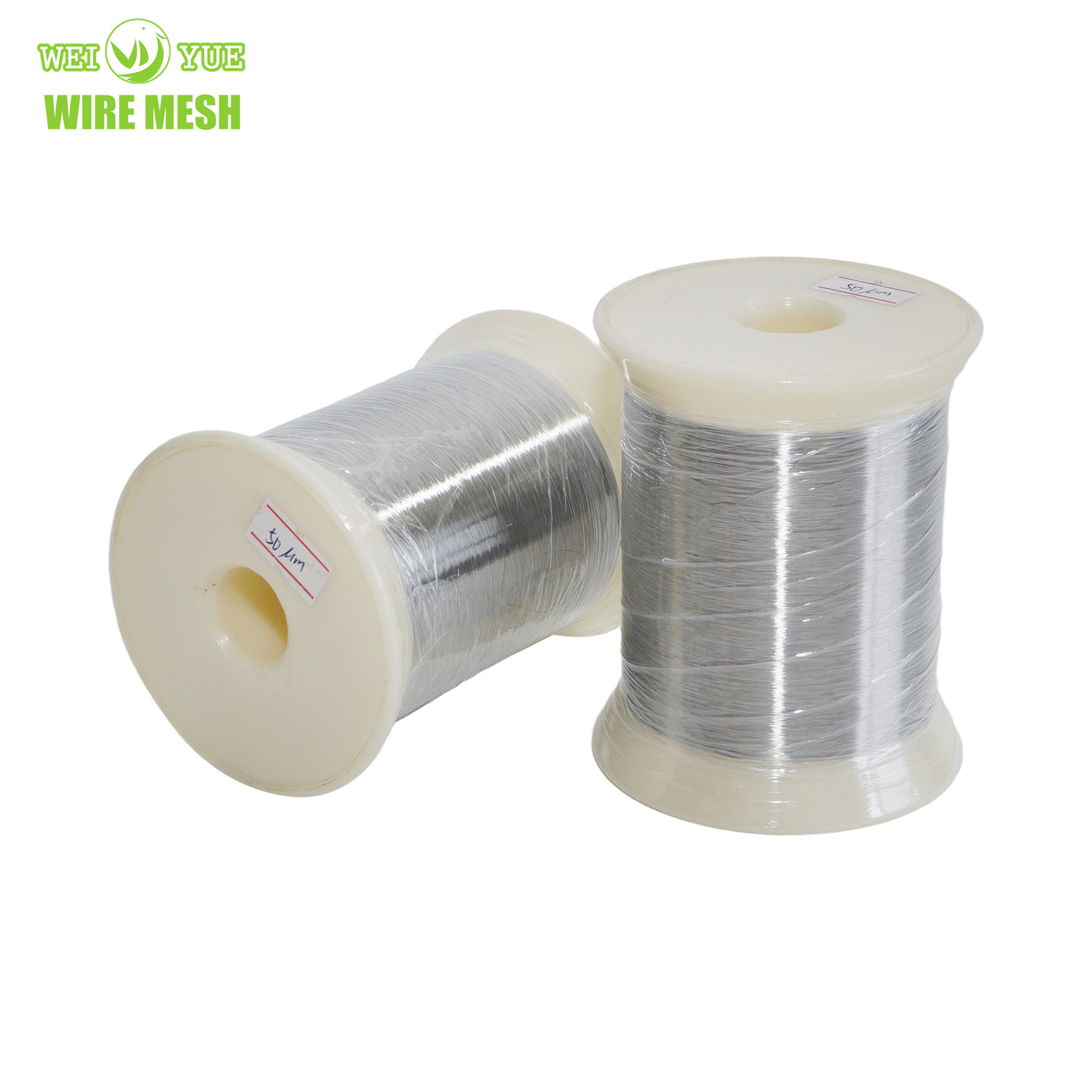
The term stainless steel micro wire usually signals that diameter control and careful handling are central to the job. On the supplied product range, Weiyue lists fine wire from 0.015 mm to 0.08 mm and hard wire from 0.08 mm to 1.8 mm. That boundary is useful for sourcing discussions, but it should not replace an application drawing or a defined tolerance. A 0.018 mm wire used for a delicate assembly and a 0.05 mm wire used for weaving may both be called micro wire while requiring very different delivery controls.
For a product-focused starting point, see Weiyue’s 0.018 mm 316L precision micro wire. The listing identifies 304, 304L, 316, and 316L as available grades and shows the wire family’s stated fine-diameter range.
The word “stainless” should not be read as “immune to corrosion.” Corrosion performance is conditional: chloride exposure, cleaning chemicals, temperature, trapped moisture, deposits, crevices, and contact with other metals can all change the outcome. Grade selection therefore starts with the environment, then moves to the product form. In many general indoor or moderate service environments, 304 stainless steel wire is a practical starting point. Where chloride-bearing, marine, or more chemically demanding exposure is expected, 316 or 316L may be considered because molybdenum-bearing 316 grades are commonly chosen for improved resistance in such conditions. The final decision belongs to the responsible engineer and applicable project specification.
Mechanical properties also need to be translated into process language. Tensile strength alone does not tell a buyer whether wire will form cleanly around a mandrel, recover as a spring, or remain stable in a woven construction. Temper describes the supplied working condition. Soft wire generally supports bending and forming; harder wire can be useful where higher spring response or shape retention is required. A request should specify the required condition rather than leaving “stainless wire” to imply it.
Selection factor | Questions to resolve | Why it matters |
|---|---|---|
Grade | What fluids, salts, cleaning agents, and temperatures will occur? | Matches corrosion resistance to service conditions. |
Diameter | What finished size and tolerance can the downstream process accept? | Influences fit, flexibility, open area, and electrical or mechanical behaviour. |
Temper | Will the wire be formed, woven, tied, or used as a resilient element? | Helps prevent cracking, excessive springback, or unstable shaping. |
Surface | Is brightness, matteness, cleanliness, lubricity, or a welding-ready surface important? | Can affect appearance, friction, joining, and contamination control. |
Packaging | What spool size, winding direction, and payoff behaviour suit the equipment? | Reduces tangling, stops, and avoidable handling damage. |
Fine stainless steel wire is often sourced by nominal diameter alone. That creates avoidable ambiguity. A buyer should instead explain the use case: “for plain weaving on an automated loom,” “for a small formed spring,” “for a twisted strand,” or “for conductive textile blending.” With that context, the supplier can discuss a meaningful tolerance, the right condition, and the spool arrangement. If the process has a critical mandrel, nozzle, guide, aperture, or electrical-resistance requirement, share that constraint early.
For example, a wire destined for a high-count woven screen must work repeatedly through the weaving process without frequent breaks. Surface consistency, coil payoff, and diameter stability can be as relevant as the nominal grade. A wire intended for a formed part may need controlled ductility and a known springback response. In either case, sample evaluation should mirror the real process rather than being limited to a visual inspection of the coil.
Weiyue’s 0.05 mm stainless steel micro wire product page identifies soft, semi-soft, and hard conditions, as well as bright and matt surface options. These are useful quotation fields to confirm against the intended operation.
The most useful way to discuss applications is not to list industries, but to connect each industry with the property that drives the choice. The following examples show where the target keyword appears in real purchasing conversations and what should be clarified before material selection.
In technical textiles, fine wire can be blended, woven, knitted, or incorporated into structures that need conductivity, antistatic behaviour, shielding, reinforcement, or a particular visual effect. The relevant questions include bend radius, fatigue under flexing, wire-to-fibre interaction, wash or cleaning exposure, and whether the finished textile will be cut, sewn, or laminated. A wire that is technically corrosion resistant can still cause process issues if its temper or spool payoff is unsuitable for the textile equipment. Define the textile construction and the required wire feel, not just the diameter.
Aerospace-related work demands careful control of material identification, specification compliance, and traceability. Stainless Steel Metal Wire may be considered for safety wire, formed retaining features, screens, braided constructions, or specialist assemblies, but selection must follow the governing drawing, material specification, qualification route, and customer requirements. Do not substitute a commercial product page for an approved aerospace material callout. The correct sourcing step is to compare required grade, condition, certification, testing, and lot traceability with the project’s documented requirements before placing an order.
In biochemical processing environments, stainless wire can be used within screens, baskets, supports, or equipment-related components where cleanability and environmental compatibility matter. The word “biochemical” covers a wide range of media, so it is essential to identify process chemicals, concentration, temperature, cleaning-in-place agents, sterilisation method, and any contamination limits. 316L stainless steel wire is often discussed for more demanding environments, but suitability should be verified against the actual process rather than assumed from the grade name. Surface finish and the ability to clean the finished construction are part of the design question.
Modern industrial applications range from filtration and mesh weaving to springs, brushes, binding wire, conveyor-related parts, safety wire, and fabricated components. Here the value of precise terminology is especially clear. A weaving operation may focus on aperture stability. A spring maker may focus on temper and dimensional repeatability. A filter fabricator may need a combination of material grade, mesh design, and downstream cutting or forming. For these jobs, start with the function the part must perform, then specify the wire that lets the fabrication process meet it consistently.
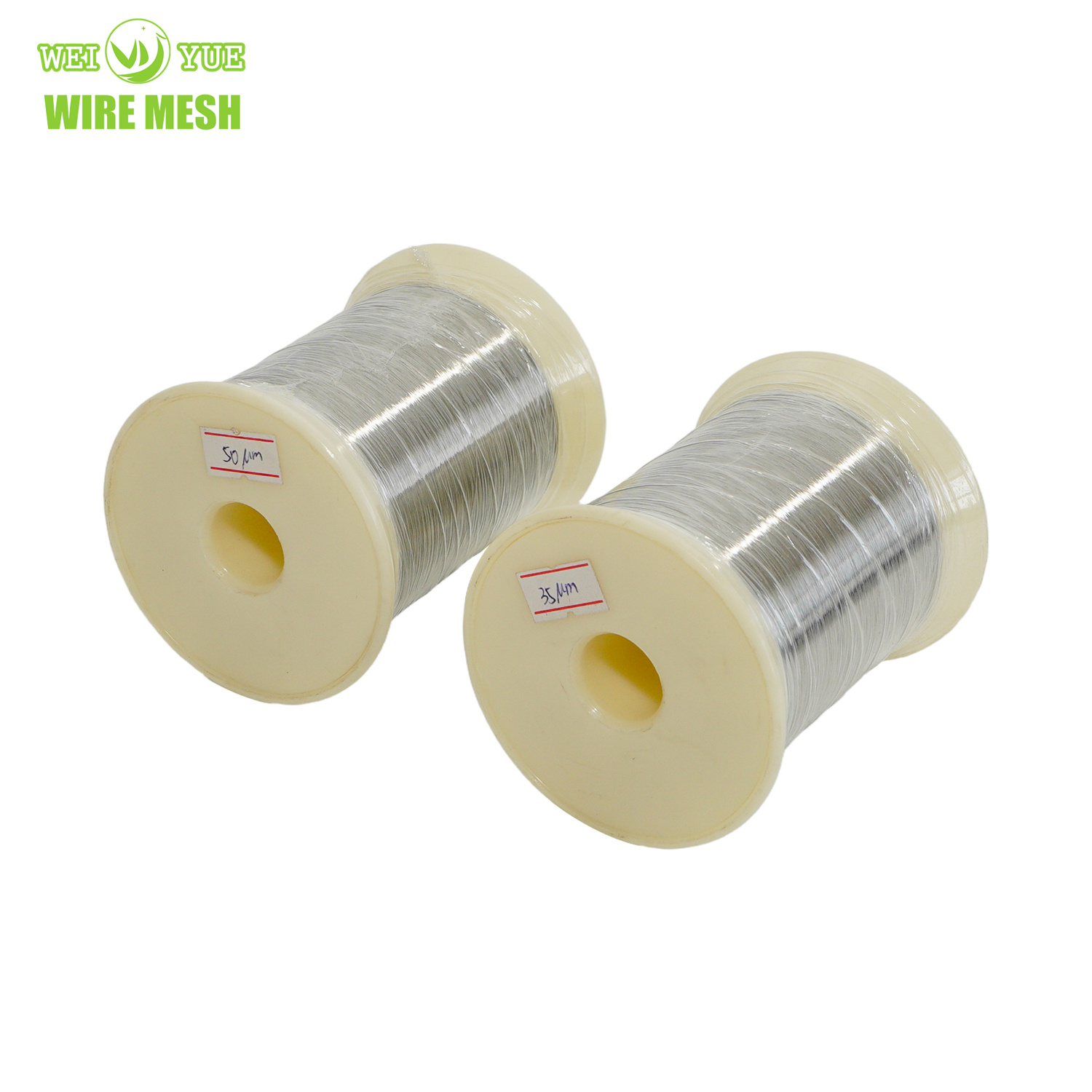
A concise but complete request for quotation saves time for both sides. Begin with the application and the material designation requested by the project. State nominal diameter and the tolerance or acceptance method. Add temper or required forming behaviour, surface condition, spool or coil details, estimated order quantity, and any documents needed at shipment. If the wire will become a woven product, include mesh count, weave, aperture, and width separately; those are properties of the finished fabric, not merely the wire.
It is also sensible to agree how discrepancies will be handled. For critical work, define the measuring method, the number of checks per coil or lot, sampling plan, and packaging condition on arrival. For development programs, order a trial quantity and process it using normal production settings. A trial should test the decision you actually need to make: weaving break rate, forming consistency, joining response, or performance in the intended environment.
Weiyue describes its wire offer as available in grades including 304, 304L, 316, and 316L, with fine diameters from 0.015 mm to 0.08 mm. When your project calls for a smaller-diameter option, use the product page and your own technical requirements together—not a generic description alone—to confirm whether the item is appropriate.
The first mistake is treating 304 and 316 as interchangeable labels. Grade must reflect service exposure and the project’s own specification. The second is asking for “soft” or “hard” without describing the operation. The third is skipping packaging details for delicate fine wire: a good product can become difficult to use when the coil, spool, or payoff is wrong for the equipment. The fourth is assuming micro-wire suitability from a photograph or nominal diameter; it must be evaluated in the actual downstream process.
A final mistake is letting an attractive initial price obscure process cost. If wire breaks frequently, tangles, forms inconsistently, or does not suit the environment, the cost appears later as scrap, downtime, rework, and requalification. For production buyers, the more reliable comparison is total process fit: material, tolerances, condition, packaging, documentation, and the supplier’s ability to communicate clearly about the application.
Stainless Steel Metal Wire should be selected as a defined engineering input, not as a generic commodity. Start with the service environment, then align grade, diameter, temper, surface, packaging, and verification with the next manufacturing step. Textile, aerospace, biochemical, and modern industrial projects each impose different constraints, which is why an application-led specification is more useful than a grade-only request. Weiyue’s micro-wire range provides a relevant product reference for projects that need 304, 304L, 316, or 316L fine wire; the final purchasing decision should be confirmed against the job’s technical and quality requirements.
It can be used in wire mesh weaving, filters, formed components, springs, tie wire, safety wire, technical textiles, and many industrial fabrications. The right use depends on grade, diameter, temper, and the finished component design.
Start with the operating environment and the governing material specification. 304 is commonly considered for many general-purpose applications, while 316 or 316L is often evaluated for more demanding chloride or chemical exposure. Project requirements should determine the final choice.
The term is used for very fine wire and is not a universal standard by itself. On the referenced Weiyue product pages, fine wire is listed from 0.015 mm to 0.08 mm. Always specify the exact diameter and tolerance needed.
Temper influences how wire bends, forms, springs back, and behaves in downstream equipment. State whether the process needs a soft, semi-soft, hard, or otherwise defined condition.
Include application, grade, nominal diameter, tolerance, temper, surface requirement, spool or coil details, quantity, documentation needs, and the acceptance method for critical characteristics.
Yes, but wire is only one part of the finished filter design. Mesh count, weave pattern, aperture, width, material grade, and fabrication method must also be specified and tested for the intended fluid or process.


