Views: 0 Author: Site Editor Publish Time: 2026-03-13 Origin: Site


There are three main ways to make stainless steel wire harder: cold working, heat treatment, and precipitation hardening. Each method is best suited for specific types of wire. For instance, cold working is ideal for austenitic alloys such as SS304/SS316 stainless steel wire. Heat treatment is most effective for martensitic wires, while precipitation hardening is suitable for certain special grades. It’s important to choose the right method for your stainless steel fine wire based on its intended use. This ensures you achieve the strongest and most reliable results.
Pick the best way to harden your stainless steel wire. Cold working is good for austenitic grades. Heat treatment works best for martensitic grades. Precipitation hardening is used for special grades.
Be safe when you harden wire. Always wear gloves and safety glasses. Work in a place with fresh air to stay safe.
Check how hard your wire is after you harden it. Use tests like Rockwell or Vickers to see if it is right for your project.
Look at the wire often while you harden it. Watch for stress or cracks so your final product does not break.
Use more than one hardening method for tough jobs. For example, try cold working and heat treatment together for the best strength and durability.
Stainless steel wire is used in many industries. Each type has its own special features and jobs. The most common grades are 304, 304L, 316, and 316L. These grades are strong and do not rust easily. You can pick wires with different thicknesses, hardness, and looks. Here is a table that lists some usual features:
Product Name | Stainless Steel Micro Wire | |
|---|---|---|
Grade | 304, 304L, 316, 316L | |
Wire Diameter | 0.015mm - 0.08mm | |
Condition | soft wire, semi-soft wire, hard wire | |
Surface | electrolysis bright, bright, matt | |
Type | Hydrogen, Cold rolled, light | |
Application | Construction, Fencing, Manufacturing |
People use stainless steel wire for many things. Some uses are tie wire, pins, filters, gaskets, conveyors, jewelry, springs, and electrical work. You also see it in kitchen tools, pet cages, grill racks, and food machines. Stainless steel wire is good for factories and homes.
Hardening makes stainless steel wire tougher and last longer. When you harden steel, it gets stronger and harder. This means the wire bends less but does not break easily. Here is a table that shows the difference between hardened and annealed stainless steel wire:
Property | Hardened Stainless Steel Wire | Annealed Stainless Steel Wire |
|---|---|---|
Tensile Strength | Higher | Lower |
Hardness | Higher | Lower |
Ductility | Lower | Higher |
Softening Effect | None | Present |
You need hardened stainless steel wire for hard jobs. For example, it is used in airplane cables, medical tools, big bridges, boat ropes, car springs, and wire screens. Hardened wire is also used in food machines, safety fences, and art. Picking the right way to harden the wire helps it work well in tough places.
Cold working is one of the most common hardening techniques for stainless steel wire. You use this method to make the wire stronger by shaping it at room temperature. When you bend, stretch, or roll the wire, you change its structure. This process is called plastic deformation. As you work the wire, it becomes harder and less likely to bend again. The increase in strength happens because the metal’s internal structure changes. More dislocations form inside the wire, and these dislocations block each other. This makes it harder for the wire to move or change shape. Cold rolling can also turn some of the austenite into martensite, which is a much harder form of steel. The grain boundaries inside the wire become more dense, which also helps to increase strength.
Before you start, gather the right tools. The tools you need depend on the size and amount of wire you want to harden. Here are some common tools for cold working stainless steel wire:
Wire drawing dies or draw plates
Pliers (flat-nose and round-nose)
Bench vise or wire straightener
Rolling mill (for larger wires)
Gloves and safety glasses
Set up your workspace in a clean, well-lit area. Secure the wire in a vise or use a wire straightener to keep it steady. Make sure you wear gloves to protect your hands and safety glasses to shield your eyes from flying pieces.
Follow these steps to use cold working as one of your main hardening techniques:
Secure the wire: Place the stainless steel wire in a vise or wire straightener. Make sure it does not slip.
Choose your tool: For thin wire, use pliers or a draw plate. For thicker wire, use a rolling mill.
Apply force: Pull the wire through the draw plate or roll it in the mill. You can also twist or bend the wire with pliers. Each pass makes the wire harder.
Check progress: After each pass, test the wire’s hardness by trying to bend it. If it bends easily, repeat the process.
Repeat as needed: Continue drawing, rolling, or bending until the wire reaches the desired hardness. Do not overwork the wire, or it may crack.
Finish up: When you finish, inspect the wire for cracks or weak spots.
You can get the best results from cold working by following these tips:
Use steady, even pressure when drawing or rolling the wire.
Do not rush. Quick movements can cause the wire to snap.
Clean the wire before you start. Dirt or oil can damage your tools and affect the finish.
Check the wire often for signs of stress, like small cracks or changes in color.
If you need to harden steel wire for very tough jobs, combine cold working with other hardening techniques, such as heat treatment or precipitation hardening.
Remember that cold working increases dislocation density, which blocks plastic flow and makes the wire stronger.
Cold rolling can also change some of the wire’s structure from austenite to martensite, which is much harder.
The more you work the wire, the more grain boundaries form. These boundaries make it even harder for the wire to change shape.
Cold working is a reliable way to harden steel wire, especially for grades like 304 and 316. You can use this method for jewelry, springs, and many other projects that need strong, flexible wire. By following these steps and tips, you will master one of the most important hardening techniques for stainless steel wire.
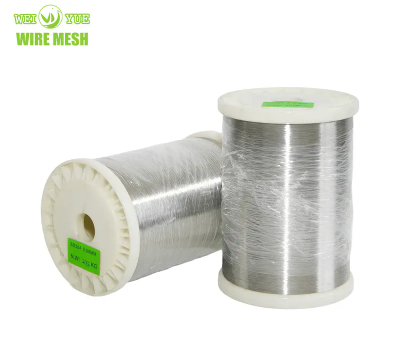
You can use heat treatment to harden certain types of stainless steel wire. Martensitic grades, such as 410, 420, and 431, respond well to heat treatment processes. These grades change their internal structure when you heat and cool them. Austenitic grades like 304 and 316 do not harden with heat treatment. You should check the wire’s grade before starting any hardening procedure. If you use the wrong grade, you will not see much change in hardness.
Stainless Steel Wire Grade | Heat Treatment Response | Typical Uses |
|---|---|---|
410, 420, 431 | Good | Springs, cutting tools |
304, 316 | Poor | Jewelry, medical wire |
You can follow these steps to harden martensitic stainless steel wire:
Clean the wire. Remove dirt, oil, or grease. This prevents contamination during heating.
Heat the wire. Place the wire in a furnace. Raise the temperature to 950°C–1050°C (1742°F–1922°F). The wire turns bright red. Hold this temperature for 30–60 minutes. This changes the wire’s structure to austenite.
Quench the wire. Quickly cool the wire by placing it in oil, water, or brine. This step transforms austenite into martensite, making the wire much harder.
Temper the wire. Reheat the wire to 150°C–400°C (302°F–752°F) for 1–2 hours. This reduces brittleness and improves toughness.
You must follow each step carefully. If you skip tempering, the wire may crack or break during use.
Quenching the metal is a key step in the hardening procedure. You heat the wire above the critical temperature, then cool it quickly. The choice of quenching medium affects the wire’s hardness and structure.
Oil gives a slower cooling rate. This reduces distortion and cracking.
Water cools the wire faster. You get higher hardness, but there is a greater risk of cracking.
Brine cools even faster than water. This can cause more distortion.
When you quench stainless steel wire, you transform austenite into martensite. Martensite is much harder than other forms of steel. Rapid cooling can create internal stresses. These stresses may lead to distortion or cracks. Oil quenching is safer for most projects. Water and brine are best when you need maximum hardness, but you must watch for damage.
After quenching, you should temper the wire. Tempering means reheating the wire to a lower temperature. This step makes the wire less brittle and more flexible. You can adjust the tempering temperature to balance hardness and toughness.
Quenching Medium | Cooling Rate | Hardness | Risk of Cracking |
|---|---|---|---|
Oil | Slow | High | Low |
Water | Fast | Higher | Medium |
Brine | Very Fast | Highest | High |
You must follow safety rules during heat treatment. High temperatures can cause burns. Hot wire can spark or break. Always wear gloves, safety glasses, and protective clothing. Use tongs to handle hot wire. Keep water and oil away from open flames. Make sure your workspace has good ventilation.
You should avoid warping or cracking by heating the wire evenly. Do not heat too quickly. Place the wire in the furnace so heat spreads across the whole surface. When quenching, lower the wire slowly into the medium. Sudden movement can cause distortion.
You can harden stainless steel wire with heat treatment if you follow these steps and safety tips. This method gives you strong, reliable wire for tough jobs.
You should use precipitation hardening if you want stainless steel wire to be very strong but not change shape much. This method works best for special grades like 15-5 PH stainless steel. These wires get much harder with this process and can reach about 70 HRC. The wire still keeps good corrosion resistance, which is important for many uses.
Precipitation hardening is not like other ways to make wire stronger. It uses tiny particles to stop things from moving inside the metal. This makes the wire much stronger. You can see how it is different in the table below:
Method | Main strengthening others | Typical materials | Key advantage | Key limit |
|---|---|---|---|---|
Precipitation hardening | Fine precipitates block dislocations | PH stainless, Al alloys, Ni alloys | Big strength gain with small shape change | Sensitive to time/temperature; can affect toughness |
Work hardening | Plastic deformation raises dislocation density | Many ductile metals | No furnace needed; local strengthening possible | Can reduce ductility; hard to apply uniformly |
Quench & temper | Martensite + tempered structure | Many steels | Strong and tough when done right | Distortion/cracking risks |
Precipitation hardening is not the same as annealing or tempering. Annealing makes metal softer. Tempering makes metal less hard after quenching. Precipitation hardening uses heat to make tiny particles that help the wire get harder and stronger.
There are three main steps to make stainless steel wire hard with precipitation hardening. Each step changes the wire and makes it stronger.
Solutionizing: Heat the wire to a high temperature (about 950°C). This mixes the strengthening parts into the wire.
Quenching: Cool the wire fast, usually in water or air. This keeps the parts mixed in and forms a supersaturated solid solution.
Aging: Heat the wire again to a lower temperature (between 482°C and 621°C) for a set time. Tiny particles form inside the wire and stop movement, making it much stronger.
You can see how different aging steps change hardness and strength in the chart below:

The table below shows common aging steps and what happens:
Condition | Hardening Temperature | Time | Hardness (Rockwell C) | Tensile Strength (MPa) |
|---|---|---|---|---|
H900 | 482°C | 1 hour | 44 | 1310 |
H925 | 496°C | 4 hours | 42 | 1170-1320 |
H1025 | 552°C | 4 hours | 38 | 1070-1220 |
H1075 | 580°C | 4 hours | 36 | 1000-1150 |
H1100 | 593°C | 4 hours | 35 | 970-1120 |
H1150 | 621°C | 4 hours | 33 | 930-1080 |
Tip: Always check the wire’s grade and use the right temperature and time for each step. This helps you get the best results and stops problems like brittleness.
Precipitation hardening is a good way to make stainless steel wire very strong for hard jobs. You can use this method for springs, medical tools, and parts that need both strength and corrosion resistance.
You need to pick the best way to harden stainless steel wire for your project. The right choice depends on what you want the wire to do. Here are some steps you can follow:
Check how much corrosion resistance you need.
Think about the strength you want. Cold working and heat treatment change the wire’s strength in different ways.
Pick an alloy that is easy to shape if you need to form the wire.
Make sure you can get the alloy you want.
Look at how complex your part is and if the wire coating matters.
You might run into problems when you try to harden stainless steel wire. Machining austenitic grades can be tough because they have high toughness and low thermal conductivity. These features can cause built-up edges on tools, breakage of ceramic inserts, and sudden drops in tool hardness. You may notice your tools wear out fast or that the wire forms tough chips. These mistakes can make the hardening process harder and lower the quality of your wire.
If you skip steps like quenching the metal or tempering, you can make the wire brittle or weak. Overworking the wire during cold working can also cause cracks. Always check your process and tools to avoid these issues.
After you finish hardening, you should test the wire to see if it meets your needs. You can use different tests to check the mechanical properties of stainless steel wire. Here are some common methods:
Test Method | Best For | Advantages |
|---|---|---|
Rockwell | Metals, fast routine testing | Direct digital reading, various scales |
Brinell | Large or coarse materials | Stable results, tolerant of rough surfaces |
Vickers | Thin materials, coatings | Precise micro/macro readings, lab-friendly |
Brinell Hardness Test works well for rough or large-grained wire.
Rockwell Hardness Test gives you quick, direct results and is common in factories.
Vickers Hardness Test is best for thin wire or coatings because it uses small indents.
You can harden stainless steel wire using three main methods.
Use cold working by rolling or bending the wire, then re-age at the right temperature.
For heat treatment, heat, quench, and temper the wire to get the best strength.
Try precipitation hardening by solutionizing, quenching, and aging the wire.
Always match the method to your wire type. Make a checklist for each project. Follow safety rules and test your results to avoid brittleness or cracks.
You cannot harden every type. Austenitic wires like 304 and 316 respond best to cold working. Martensitic wires need heat treatment. Precipitation hardening works for special grades like 17-4 PH.
You need pliers, wire drawing dies, a bench vise, and safety gear. For thick wire, use a rolling mill. Clean tools help you get better results.
You can use a Rockwell or Vickers hardness tester. Try bending the wire by hand. If it resists bending, you have increased hardness.
Heat treatment needs high temperatures and safety gear. You should use gloves, goggles, and tongs. Always work in a well-ventilated area.
Wire cracks if you overwork it or skip tempering. You should check for stress signs and follow each step carefully. If cracks appear, anneal the wire before continuing.