
Views: 0 Author: Site Editor Publish Time: 2026-03-31 Origin: Site


Why do so many industries keep choosing 304 stainless steel mesh over other materials? The answer lies in its balance of strength, corrosion resistance, and value. In this article, you will learn how stainless steel mesh delivers durability, low maintenance, and practical performance for a wide range of projects.
304 stainless steel mesh is widely recognized for its remarkable corrosion resistance, which makes it an ideal material for various industrial, commercial, and architectural applications. The key to its resilience lies in the composition of 304 stainless steel, which contains 18% chromium and 8% nickel, forming a passive oxide layer on the surface. This layer acts as a shield, protecting the mesh from rust and corrosion, even when exposed to harsh conditions such as high humidity, moisture, and mild chemicals.
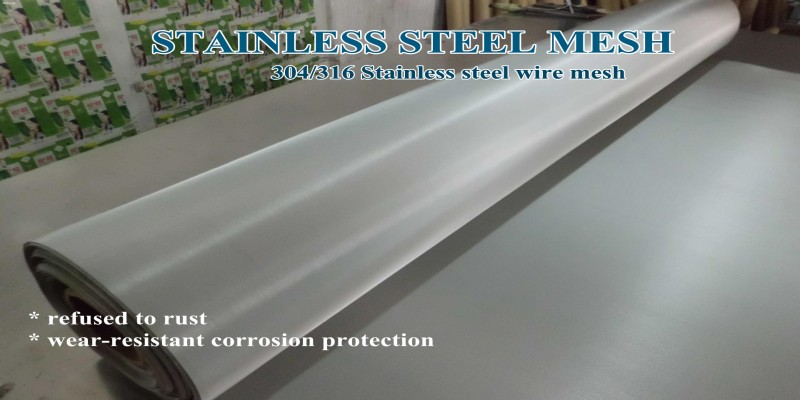
One of the main reasons 304 stainless steel mesh is so widely used is its ability to resist rust and corrosion. Whether used in outdoor environments or environments exposed to chemicals, the mesh performs reliably without deteriorating. This property is particularly beneficial in industries such as water treatment, food processing, and chemical manufacturing, where exposure to water, acids, or alkaline solutions is common. Unlike some materials that degrade quickly, 304 stainless steel mesh retains its integrity and does not discolor, making it a long-lasting option for these demanding applications.
The corrosion resistance directly contributes to the extended service life of 304 stainless steel mesh. Its resistance to environmental factors reduces the need for frequent replacements, which is crucial for industries seeking cost-effective materials that last. Whether used in a marine environment, exposed to seawater, or in a chemical plant, the mesh can endure prolonged exposure without suffering from the typical wear and tear that affects other materials. This long lifespan minimizes downtime and reduces maintenance costs, making it an ideal investment for companies looking for long-term durability.
In addition to its corrosion resistance, 304 stainless steel mesh also exhibits exceptional durability. It can withstand physical stress, abrasion, and wear and tear, which is vital in industries such as mining, construction, and automotive. Whether subjected to heavy loads, mechanical forces, or exposure to harsh substances, the mesh maintains its shape and strength over time. For example, in filtration applications, the mesh's ability to resist physical damage ensures that it will continue to function effectively without degradation, even when exposed to abrasive materials.
304 stainless steel mesh is valued not only for corrosion resistance, but also for the way it performs when temperature and magnetic sensitivity become part of the selection criteria. The source material describes 304 mesh as suitable for elevated-heat service and thermal cycling, and it also notes that the mesh is non-magnetic in the annealed condition. Together, these two traits make the material more dependable in processing lines, enclosed equipment, and controlled technical environments where dimensional stability and signal neutrality both matter.
Heat resistance matters because wire mesh often works as part of a larger system rather than as a decorative surface. In real operating conditions, the mesh may be exposed to hot air, steam, heated product streams, or repeated warming and cooling cycles. A material that softens too quickly or loses form under temperature swings can affect flow consistency, filtration accuracy, or overall equipment reliability. By contrast, 304 stainless steel mesh is commonly chosen when buyers need a material that can keep its structure under sustained heat without becoming unstable too soon. The article also associates this benefit with ovens, furnaces, and chemical processing environments, which reinforces its value in settings where temperature is not occasional, but routine.
Property | Practical value | Typical environment |
Heat resistance | Helps the mesh keep its shape and performance under elevated temperatures | Ovens, furnaces, hot-process systems |
Thermal cycling tolerance | Supports repeated heating and cooling without rapid loss of integrity | Batch processing lines, drying systems |
Non-magnetic behavior in annealed condition | Reduces unwanted magnetic interaction around sensitive devices | Laboratory, medical, and precision equipment |
The non-magnetic aspect of 304 stainless steel mesh is especially useful when the surrounding environment includes sensitive instruments or controlled measurements. In those cases, magnetic interference can be more than a technical nuisance; it can reduce accuracy, disturb readings, or limit where the mesh can be installed. Because annealed 304 mesh is identified as non-magnetic in the source material, it becomes a practical option for applications that prioritize stable performance near instruments, sensors, and precision assemblies.
When heat resistance and non-magnetic behavior appear in the same material, specifiers gain more flexibility during product selection. Instead of choosing one mesh for temperature performance and another for signal-sensitive equipment zones, they can often rely on 304 stainless steel mesh where both concerns overlap. This is particularly useful in sectors that combine process heat with technical accuracy, such as food handling systems, scientific setups, and specialized industrial equipment.
Cost-effectiveness in stainless steel mesh is not simply about choosing the lowest purchase price. It is about selecting a grade that delivers enough corrosion resistance, strength, and service life for the working environment without paying for performance the project does not actually need. In the source material, 304 stainless steel mesh is presented as the standard, widely used option because it balances durability and corrosion resistance with a lower price point than higher-grade stainless steels, while 316 is described as the premium alternative for more aggressive conditions such as salts, acids, seawater, and marine exposure. That positioning makes 304 stainless steel mesh especially attractive for buyers who need dependable performance in general industrial, filtration, food, or outdoor environments without moving into a more expensive alloy too early.
Selection factor | 304 stainless steel mesh | 316 stainless steel mesh |
Cost level | More budget-friendly for mainstream use | Higher upfront material cost |
Best fit | General moisture, light chemicals, broad industrial use | Chloride-rich, marine, and more corrosive environments |
Value logic | Strong balance of price and performance | Extra protection when conditions justify the premium |
The practical advantage of 304 stainless steel mesh is that it covers the performance requirements of many projects without stretching the material budget. It resists rust, handles outdoor exposure well, maintains structural integrity under load, and is available in a wide range of mesh sizes and specifications, which also supports easier sourcing and more predictable procurement. When a mesh is widely available and flexible enough for different fabrication needs, buyers often gain savings beyond raw material price alone, including simpler replacement planning, fewer specification changes, and better production continuity. The article also frames 304 as a cost-effective option because it provides sufficient corrosion resistance and durability at a lower price point than higher-grade alternatives, which is exactly the kind of value-driven message many industrial buyers are looking for.
Low maintenance is where 304 stainless steel mesh continues to save money after installation. Because the material resists corrosion and retains its surface condition well, it does not require constant intervention to remain functional and presentable. The source text specifically notes that 304 mesh is easy to maintain, resists dirt buildup, and can be cleaned with basic methods such as water, mild detergents, or steam. That matters in real operations because maintenance is not only a labor issue; it also affects shutdown frequency, cleaning schedules, inspection time, and replacement intervals.
Common areas where maintenance savings show up include:
● fewer unplanned replacements caused by rust-related damage
● less cleaning effort in hygiene-sensitive environments
● lower downtime from reduced repair and changeout frequency
● more stable long-term appearance in exposed installations
One of the strongest advantages of 304 stainless steel mesh is that it adapts well to different production needs without becoming difficult to process. The source material repeatedly presents it as a mesh that can be welded, cut, formed, woven, and supplied in a broad range of specifications, which gives buyers more freedom during both design and manufacturing. Instead of forcing a project to conform to a rigid material format, 304 stainless steel mesh can usually be matched to the required opening size, wire diameter, weave pattern, and finished shape. That flexibility matters in real-world sourcing because engineers, fabricators, and designers often need a material that can move from concept to fabrication without major compromises.
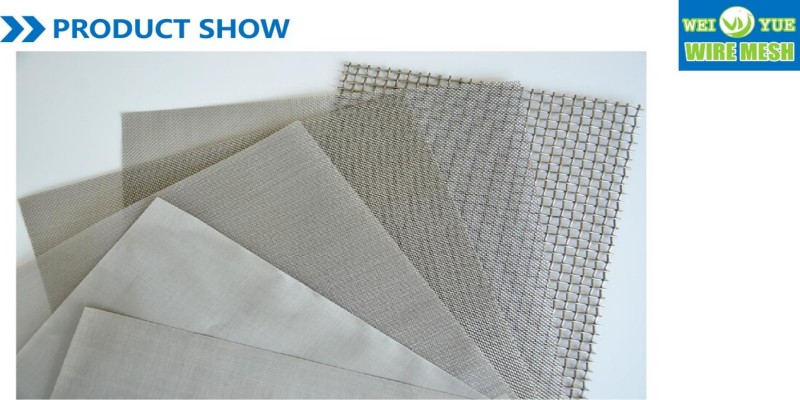
Fabrication ease adds value long before the mesh reaches final installation. A material that can be processed efficiently helps shorten lead times, reduces unnecessary handling problems, and supports custom parts rather than forcing teams to rely only on standard stock sizes. In the source text, 304 stainless steel mesh is described as easy to weld, cut, and form, while the supplier capabilities listed around slitting, welding, weaving, cut-to-size work, stamping, cylinders, and filter screens show how naturally this grade fits customized production. That means the mesh can serve as more than a flat sheet material; it can be turned into application-specific components with less difficulty than many buyers expect from a corrosion-resistant metal mesh.
Fabrication advantage | Why it matters in practice |
Easy cutting and slitting | Helps match mesh size to exact project dimensions |
Good forming capability | Supports shaped parts rather than only flat panels |
Weld-friendly processing | Useful for assemblies, frames, and fabricated units |
Wide size and weave options | Makes specification easier across fine and heavy-duty needs |
Versatility also comes from the fact that 304 stainless steel mesh works across both technical and visual roles. The source content links it to structural and screening functions, but it also highlights its clean appearance and reflective surface, which suit decorative screens, grills, partitions, facades, and infill panels. At the same time, it is presented as appropriate for industrial filtration, sieving, particle separation, protective screens, and other performance-driven uses. This combination is important because some mesh materials are chosen only for utility, while others are chosen mainly for appearance. 304 stainless steel mesh sits between those extremes, making it suitable where a project needs strength, process compatibility, and a finished look from the same material family.
304 stainless steel mesh offers corrosion resistance, durability, heat resistance, non-magnetic performance, and strong value. Its low maintenance needs and fabrication flexibility make it a practical choice for many industries. Hebei Weiyue Wire Mesh Products Co.,Ltd. provides reliable 304 stainless steel mesh with consistent quality and custom service, helping customers choose a durable, cost-effective solution for long-term use.
A: 304 stainless steel mesh balances corrosion resistance, strength, and cost for general industrial use.
A: 304 stainless steel mesh performs well in moisture, washdown, and mild chemical exposure.
A: 304 stainless steel mesh is usually more economical, while 316 suits chloride-rich or marine conditions.


