
Views: 0 Author: Site Editor Publish Time: 2026-03-14 Origin: Site


You can cut stainless steel wire mesh easily if you match your tool to the mesh thickness and follow safe methods. For thin mesh, use scissors or a rotary cutter. For medium mesh, tin snips or a nibbler work best. Thick mesh calls for an angle grinder or industrial blades. Always wear gloves and goggles, and set up a clean workspace. People use SS304/SS316 stainless steel wire in home repairs, construction, and industry because it resists rust. Stainless steel fine wire is perfect for insect screens, fencing, and garden netting.
Pick the right tool for the mesh thickness. Use scissors for thin mesh. Use tin snips for medium mesh. Use angle grinders for thick mesh.
Always wear safety gear to stay safe. Put on gloves, goggles, and steel-toed boots. This will protect you while cutting.
Get your workspace ready before you start. Remove clutter and make sure the area is bright. Lay the mesh flat so you can cut it accurately.
Cut slowly and be careful to stop fraying. Check your tools to make sure they are sharp before you begin.
Smooth out the cut edges by deburring them. This helps stop injuries and makes the surface safe and smooth.
Choosing the right tool makes cutting stainless steel wire mesh much easier. You should match your tool to the thickness of the mesh. Here is a quick guide:
Tool | Best For | Advantages | Limitations |
|---|---|---|---|
Scissors/Rotary Cutter | Thin mesh | Easy to handle, clean cuts | Not for thick mesh |
Tin Snips/Nibbler | Medium mesh | Good for straight and curved cuts | Hard to use on very thick mesh |
Angle Grinder/Industrial Blade | Heavy mesh | Fast, powerful, handles tough jobs | Needs careful handling, can be dangerous |
Diagonal Cutting Pliers | Fine to medium-gauge wire | Precise, works near surfaces | Dulls quickly on thick wire |
Heavy-Duty Wire Cut Pliers | Thick wire, industrial use | Strong, slices through tough wire | Too much for light jobs |
Some brands, like Channellock, offer tools that last longer and stay sharp after many cuts. You can look for padded handles to reduce hand strain.
You must protect yourself when cutting stainless steel wire mesh. Wear the right safety gear every time:
Heavy-duty gloves (leather or special fibers)
Safety glasses or goggles
Long-sleeve shirt or jacket
Steel-toed boots
A safe workspace helps you cut stainless steel wire mesh accurately and prevents injuries. Follow these steps:
Clear your work area of clutter.
Lay the mesh flat on a stable surface.
Use a tape measure and marker to draw your cutting line. For woven mesh, align your cut with the wire pattern.
Keep your tools sharp and clean. Remove debris and moisture after each use. Lubricate moving parts with oil and store tools in a dry place.
Make sure you have good lighting so you can see your work clearly.
When you set up your workspace and use the right tools, you make cutting safer and more efficient.
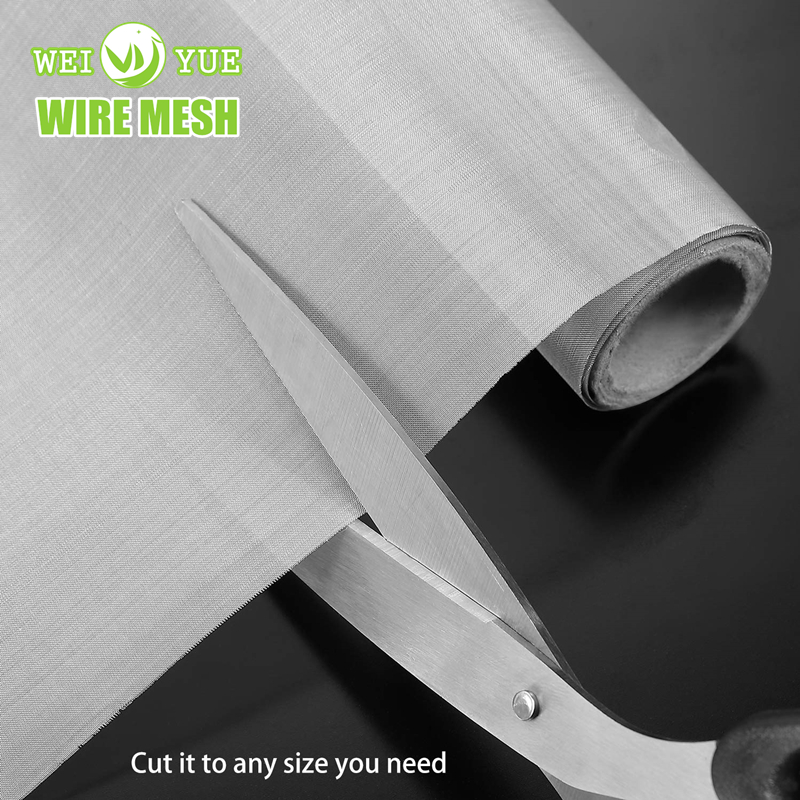
You can cut thin stainless steel wire mesh with simple tools. Scissors work well if the mesh feels flexible and the wires are fine. Choose heavy-duty scissors or shears made for metal. Rotary cutters also help you make long, straight cuts. These tools roll smoothly along the mesh and reduce hand fatigue. Use a rotary cutter if you want to cut many pieces or need extra control.
You want your cuts to look neat and prevent the mesh from fraying. Follow these steps for the best results:
Lay the mesh flat on a hard surface.
Mark your cutting line with a permanent marker or masking tape.
Hold the mesh steady with one hand. Use gloves to protect your fingers.
Cut slowly along the marked line. Keep the blades close to the wire joints for less fraying.
Check the edge after cutting. If you see sharp ends, trim them with small pliers.
Here is a table showing different cutting methods and their results:
Cutting Method | Description |
|---|---|
Shearing | Gives clean, straight cuts. Specialized shears help reduce fraying. |
Laser Cutting | Makes precise shapes. Good for prototypes but costs more. |
Waterjet Cutting | Works for many thicknesses. Keeps the mesh cool and prevents heat damage. |
Wire EDM | Cuts detailed designs. Best for hard-to-cut materials. |
After cutting, you should:
Deburr the edges. This step removes sharp bits and keeps the mesh safe to handle.
Clean the mesh. Wipe away any dust or metal pieces for a smooth finish.
You can now use your stainless steel wire mesh for screens, crafts, or repairs with confidence.
You can cut medium stainless steel wire mesh with tin snips or a nibbler. Tin snips look like strong scissors. They work well for mesh that feels too tough for regular scissors but not thick enough for an angle grinder. Choose aviation snips if you want to cut straight lines or gentle curves. These snips come in left, right, and straight-cut types. Pick the one that matches your cutting direction.
A nibbler is a tool that punches small pieces out of the mesh as you move it along your line. You can use a manual nibbler for small jobs. For larger projects, try an electric nibbler. This tool gives you more control and makes less mess than a grinder. Always wear gloves and goggles. Stainless steel wire can have sharp edges that may cut your hands.
You may need to cut curves or detailed shapes for special projects. Follow these steps to get the best results:
Use tin snips for thin mesh. They let you turn corners and follow curves with ease.
Try bolt cutters or an angle grinder if the mesh feels too thick for snips.
Wear protective gloves to keep your hands safe from sharp wires.
Shape soft metals by hand if you work with aluminum mesh. Stainless steel wire mesh needs more force.
Use pliers and a hammer to bend the mesh into tight curves or angles.
Place the mesh in a metal frame if you want to hold a shape for a large project.
You can make circles, waves, or custom patterns by moving slowly and keeping your hands steady. If you want to cut a small hole, drill a starter hole first. Then insert the tip of your snips and cut out the shape you need.
You can use these methods to create custom screens, vents, or art pieces from stainless steel wire mesh. Practice on scrap pieces before starting your main project. This helps you learn how the mesh reacts to each tool.
You need strong tools to cut heavy stainless steel wire mesh. Angle grinders and industrial blades work best for thick mesh. These tools slice through tough wires quickly and give you straight edges. You should always prepare your tools and workspace before you start.
Follow these steps to cut heavy mesh safely and accurately:
Gather your tools. Use an angle grinder with a metal-cutting disc. Have clamps ready to hold the mesh in place. Put on gloves and goggles for protection.
Measure the area you want to cut. Mark the line with a tape measure and a marker. This helps you avoid mistakes and save material.
Secure the mesh. Clamp it to a sturdy table or workbench. This keeps the mesh from moving while you cut.
Position the angle grinder. Line up the cutting disc with your marked line. Start at one edge of the mesh.
Make the cut. Guide the grinder along the line. Move at a steady speed and use even pressure. This gives you a clean cut and prevents the disc from binding.
Smooth the edges. After cutting, switch to a grinding or sanding disc. Run it along the cut edge to remove sharp bits.
You can use these steps for most heavy-duty mesh projects. Angle grinders work well for straight lines. Industrial blades can help with larger sheets or repeated cuts.
Cutting thick stainless steel wire mesh can be dangerous if you do not follow safety rules. You must protect yourself and keep your workspace safe. Here is a table of important safety precautions:
Safety Precaution | Description |
|---|---|
Use the safety guard | Always attach and adjust the safety guard to cover the disc and deflect flying particles. |
Hold the grinder firmly with both hands | Use a firm grip to control the grinder and avoid kickback. |
Position yourself properly | Stand to the side of the wheel to reduce impact from kickback or debris. |
Provide adequate ventilation | Ensure enough air circulation to prevent dust or fume accumulation. |
Use proper lighting | Ensure sufficient lighting to see clearly and avoid mistakes. |
Start and stop gradually | Start at low speed and gradually increase; do not leave the tool running unattended. |
Safety goggles or full-face shield | Protects eyes and face from flying debris and sparks. |
Gloves | Protects hands from cuts, abrasions, and burns. |
Ear plugs or muffs | Protects ears from high noise levels. |
Dust mask or respirator | Protects lungs from inhaling harmful dust or fumes. |
Leather apron or natural fiber clothing | Protects body from sparks and heat. |
Safety shoes or boots | Protects feet from falling objects and sharp edges. |
You should also use special tools and techniques to keep your hands safe and your cuts straight:
Use guards, push sticks, jigs, and fixtures to keep your hands away from the blade.
Try a push stick for short or narrow pieces. This keeps your fingers safe.
Install a spreader on table saws if you use them. This stops the mesh from pinching the blade or kicking back.
You can cut even the toughest stainless steel wire mesh with the right tools and safe habits. Always clean up sharp offcuts and store your tools safely when you finish.
You need to make the cut edges smooth and safe. Sharp ends can hurt people and scratch things. You can use different tools to finish the edges. Here is a table with some common choices:
Tool/Abrasive | Description |
|---|---|
Aluminum Oxide | Works well for cutting metal and removing weld seams. |
Silicon Carbide | Provides a steady cut and does not generate heat. |
Zircon | Strong and durable, good for grinding and cleaning metals. |
Ceramic | Lasts a long time and cuts through metal efficiently. |
Mechanical Deburring | Uses machines for fast deburring and improves quality. |
Rotary Brush Deburring | Combines deburring, edge rounding, and surface finishing for small parts. |
Use a file or sandpaper for small jobs. For big projects, try a rotary brush or a machine. Always check the mesh after you finish. Make sure the edges are smooth and not sharp.
Sharp ends on stainless steel wire mesh can cut or poke you. You must keep yourself and others safe when you handle finished mesh. Follow these steps:
Check your gloves before you use them. Look for broken rings or loose stitches.
Get new gloves if yours are damaged.
Wear gloves with a cut-resistant apron.
Use knives the right way.
Stainless steel wire mesh gloves stop cuts but not pokes. Wear other safety gear too.
Look at your gloves often for damage. Replace them if you see any problems.
Do not touch bare steel with your hands. Skin oils can make it rust. If you touch the mesh, clean it and put on oil before you store it. Keep tools and mesh in closed boxes to block dust and water. Let tools warm up before packing to stop water drops. Use packing that keeps out moisture and rust.
You can waste less by ordering custom panels and using the right tools. Machines help cut down on scrap and protect small parts. Well-trained workers help you use materials wisely.
You can cut stainless steel wire mesh safely by following these steps:
Choose the right tool for the wire thickness.
Wear gloves that meet safety standards and check them before use.
Cut close to weld points for clean edges.
Fold back loose ends to prevent injuries.
When you select tools, consider mesh specifications, strength, and durability. Take your time and handle sharp edges with care. For very thick or specialty mesh, ask a professional for help.
You match the tool to the mesh thickness. Use scissors for thin mesh, tin snips for medium mesh, and an angle grinder for thick mesh. Always check the mesh before you start.
You can minimize fraying by cutting close to wire joints. Use sharp tools and cut slowly. Clean the edges after cutting.
You should wear heavy-duty gloves, safety goggles, and a long-sleeve shirt. Steel-toed boots protect your feet.
Gloves
Goggles
Boots
You smooth the edges with a file or sandpaper. Fold back loose ends. Always check your gloves for damage before handling mesh.
Step | Action |
|---|---|
Smooth edges | Use a file |
Fold ends | Bend with pliers |


