
Views: 0 Author: Site Editor Publish Time: 2026-01-20 Origin: Site


Stainless steel fine wire helps make new medical devices. People trust it because it is safe for the body. It bends easily and does not rust. These features help keep patients safe. Fine stainless steel wire is used in many medical jobs. Doctors use it in heart surgeries and brain treatments. Stainless Steel Wire gives strength. It also helps doctors be exact. Medical workers use Stainless Steel Wire when it matters most.
Procedure Type | Description |
|---|---|
Cardiac Surgeries | Stainless steel wires close the chest after surgery. |
Interventional Cardiology | Stylet wires help guide tubes and stents in blood vessels. |
Gastrointestinal | Stylet wires help place feeding tubes and endoscopes. |
Urological | Stylet wires help put stents and sheaths in the right spot for stone removal. |
Respiratory | Stylet wires guide tubes for breathing help. |
Neurosurgical | Stylet wires help place catheters for brain treatments. |
People see stainless steel fine wire as a good choice in medicine.
Stainless steel fine wire is safe for medical use. It is biocompatible, so it does not hurt the body.
The wire is strong and flexible. This makes it good for important medical jobs like catheters and guidewires. It helps doctors do safe and careful work.
Stainless steel fine wire does not rust. It can handle tough conditions inside the body.
Picking high-quality stainless steel wire with the right certifications keeps medical devices safe and dependable.
Laser welding is the best way to join stainless steel fine wire. It makes strong and exact connections needed for medical tools.
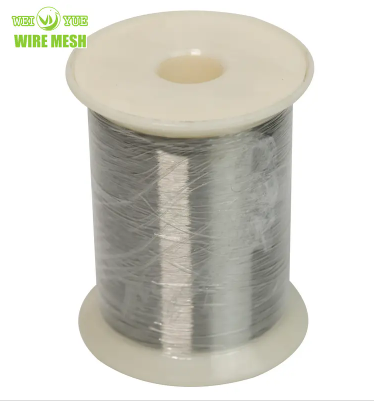
Medical stainless steel wire is safe to use inside the body. Biocompatibility means it does not hurt you or cause bad reactions. Scientists have checked this in many tests. You can look at these studies to see how it works:
Study | Findings | Conclusion |
|---|---|---|
Li et al. | Looked at copper-containing 316L SS stents | Found that 316L-Cu SS stents lower inflammation and are safer |
Ren et al. | Did blood tests on 316L-Cu SS | Showed better cell survival and less cell damage |
You want wire that bends but does not break. Medical stainless steel wire is stiff and holds its shape. This helps support medical devices. Nitinol bends more and goes back to its shape when heated. Nitinol is good for tools that need to move and change shape. Medical stainless steel wire is better for catheters and needles because it stays firm and gives control.
Medical stainless steel wire is stiff, so it works well when you need strength and stability.
Nitinol is very bendy and can return to its shape, so it is good for tools that need to move a lot.
Medical stainless steel wire is used in things like hypodermic needles and catheters because it is strong and keeps its size.
Nitinol tubing can remember its shape and go back to normal when warmed up, but medical stainless steel wire cannot do this.
Medical stainless steel wire is not good for tools that need to bend or change shape.
You want medical stainless steel wire to last a long time. The wire faces hard conditions inside the body. It touches fluids and chemicals every day. The chromium oxide layer on medical stainless steel wire stops rust and damage. This layer can fix itself if scratched. It keeps the wire safe and strong. You can trust medical stainless steel wire to stay clean and last.
Rust happens faster in places with living things than without.
Chloride ions and other chemicals can make rust worse.
Heat-treated 316L medical stainless steel wire fights rust better in salty water.
The best rust protection comes from wire heated to 1100 °C and cooled in water.
Even with changes inside, rust can still happen in very harsh chemicals.
Medical stainless steel wire is strong and lasts a long time. It does not rust or break down because of chromium. You can clean it many times and it will not get weak. People use medical stainless steel wire for scissors, screws, and stents. It works well under pressure and lasts for years. 316 medical stainless steel wire is special because it does not rust and stays clean after many uses.
Medical stainless steel wire does not rust because of chromium, which is important for tools that get cleaned a lot.
Many types of medical stainless steel wire do not react with the body, so they do not cause swelling or allergies.
Medical stainless steel wire is strong but not heavy, which is good for small tools.
People trust medical stainless steel wire for scissors, screws, and stents because it works well and lasts.
Medical stainless steel wire is used in many tools because it works well and does not cost too much. Companies pick it for many reasons:
Medical stainless steel wire does not rust, so it lasts in tough places.
It is strong and does not break easily, so it is good for important jobs.
Medical stainless steel wire is safe for people, so it does not cause bad reactions.
You can shape medical stainless steel wire into many forms for different tools.
It is not too expensive, so it is a smart choice for many medical uses.
The chromium oxide layer on medical stainless steel wire gives extra safety. This layer stops rust and keeps tools safe. If it gets scratched, it fixes itself. This means your medical stainless steel wire stays strong and clean. You can count on medical stainless steel wire for safety, strength, and good results every time.
Tip: If you pick medical stainless steel wire, you are choosing something that keeps patients safe and makes devices work well.
You start with the right material when you make medical stainless steel wire. You need to choose steel that meets strict purity standards. This helps keep patients safe and makes devices work well. You can see the chemical composition and standards for common grades in the table below:
Steel Grade | Chemical Composition | Standards |
|---|---|---|
304V | ≤0.08 C, ≤1.0 Si, ≤2.0 Mn, ≤0.040 P, ≤0.030 S, 8.0-10.5 Ni, 18.0-20.0 Cr, ≤0.75 Cu | ASTM A313, A313M, A276, F899, ISO 5832-1 |
316LVM | ≤0.03 C, ≤0.75 Si, ≤2.0 Mn, ≤0.03 P, ≤0.010 S, 13.0-15.0 Ni, 17.0-19.0 Cr, 2.25-3.00 Mo | ASTM A313, A313M, A276, F899, ISO 5832-1 |
You pick stainless steel for its strength and resistance to rust. You may also see polymers and precious metals used for special jobs. The choice of material affects how the wire works. If you use the wrong tubing, it can change the liquid inside and cause problems.
Stainless steel gives you strength and corrosion resistance.
Polymers like PTFE and polyurethane offer flexibility.
Platinum is chosen for its safety and durability.
You shape the wire by pulling it through small holes. This process is called wire drawing. You can make wire as thin as 0.010 mm or as thick as 10 mm. You need tight tolerances and smooth surfaces for medical devices. You check the wire often to make sure it meets standards.
You select raw materials based on their chemical makeup.
You test for tensile strength and look for defects.
You control the process to keep batches consistent.
You inspect the wire’s surface and size before shipping.
You keep records and monitor every step.
The quality of the base bar matters. Only materials that pass tests go into production. You make sure the wire is strong and smooth for use in medical devices.
You treat the surface to remove rough spots and make it safe for the body. You clean and polish the wire so it does not hurt tissue. You sterilize the wire to kill germs. You may use heat or chemicals. Sterilization can change the wire’s strength and stiffness, but the effect is usually small. You need to check the wire after sterilization to make sure it still works well.
Tip: Always test the wire after sterilization. This helps you catch any changes in mechanical properties.
You use welding to join wire pieces for complex devices. You need to keep the wire’s surface clean and smooth after welding. You check for cracks and weak spots. You use welding in many steps, from making frames to joining tiny parts. You test welded joints for strength and safety. You use welding to make sure devices stay together during use. You use welding to attach wire to other materials. You use welding to fix broken wires. You use welding to build strong connections in implants. You use welding to seal wire ends. You use welding to join wire in catheters and stents. You use welding to make sure the wire does not come apart. You use welding to keep the wire safe for patients.
Stainless steel fine wire is important in many medical tools. Doctors use it to do careful and safe work. The wire is strong and bends easily. It does not rust, so it lasts a long time. These features make it a good choice for many medical jobs. Let’s see how stainless steel fine wire is used in different devices.
You find stainless steel fine wire inside catheters and guidewires. These tools help doctors reach deep places in the body. They do this with only small cuts. The wire makes the catheter strong. It helps doctors move it through blood vessels.
Product Name | Description |
|---|---|
FINECROSS® M3 Coronary Micro-Guide Catheter | Uses stainless steel braid for strength and support in tough spots. |
FORTÉ Floppy Guidewire | Has a stainless steel core for better steering and support. |
Extra Stiff Guidewires | Use a stainless steel core for more support. |
Stainless steel fine wire comes in many sizes. The smallest is 0.001 inches. The biggest is 0.032 inches. This lets doctors use it for many jobs. The wire bends but stays hard. This helps move the catheter easily. Its strength and no-rust feature make it great for guidewires. 304V wire is strong and safe for the body. 304NX wire is even tougher for hard jobs.
Guidewires are needed for catheter procedures.
They help doctors put catheters in the right spot.
You get the control needed to move safely inside the body.
Stainless steel fine wire is used in implants and stents. It is strong and bends without breaking. These features help stents hold up artery walls. They also help blood flow better. The wire’s strength and bounce-back are important for stents. These things help stents handle pressure inside arteries.
Stainless steel does not rust, which is important for implants that stay in the body.
New stainless steel alloys last longer and keep stents safe.
Doctors trust these devices to work well for a long time.
Stainless steel fine wire is also used in fake body parts. It is strong and does not wear out fast. This makes it good for parts that need to last.
Stainless steel fine wire is found in many surgery tools and stitches. It helps make tools doctors use every day. You see it in stents, catheters, and guide wires for blood vessels. In bone surgery, it is used for fixing broken bones and spine devices. Endoscopy tools use stainless steel fine wire for taking samples and doing surgery.
You use it for stitches, staples, and needles.
Stainless steel fine wire does not rust.
It fights germs and fungus.
You can clean and use it again.
It is not magnetic, so it is safe in surgery rooms.
The wire lowers the chance of infection from rust.
Doctors use stainless steel fine wire for stitches because it stays strong and clean. It is also used in tools that need to be tough and exact.
Note: Stainless steel fine wire helps make stitches that last and keep wounds closed tight.
Stainless steel fine wire is used in braces and dental tools. Its features make it perfect for these jobs. The table below shows why stainless steel is picked for dental devices:
Property | Description |
|---|---|
Corrosion Resistance | Stainless steel makes a thin layer that stops rust. |
Strength and Stiffness | It is very strong and stiff, good for braces. |
Elastic Modulus | The wire’s elasticity is just right for braces. |
Springback | It has less springiness than titanium, so it works better for moving teeth. |
Bending Test | Tests show the wire is good for moving teeth. |
Stainless steel archwires are stiff and do not rust. They do not spring back much, so they give steady force. You can shape them easily. This helps when making complex dental tools. Stainless steel fine wire has been used in braces since 1929. It replaced expensive metals because it is cheaper and easier to use. By 1950, the 300 series stainless steel became the main choice for braces in the United States.
Stainless steel fine wire is also used in dental retainers. Custom-shaped wires help keep teeth in place for a long time. Dentists must put them in carefully and prepare the surface well. Lingual retainers made from stainless steel are hidden and keep teeth steady.
Tip: If you pick stainless steel fine wire for dental tools, you get strong, stable, and good results for treatment.
You need special skills to join medical stainless steel fine wire. The welding must be very exact. Laser welding is used a lot because it gives good control. The ExactWeld 430 machine helps with this job. It uses a fiber laser to weld. You can change the power and how long the laser works. This lets you weld wires as thin as 25 micrometers. You must watch the welding closely to stop gaps from forming. This is important for keeping medical devices safe.
You face many problems when working with fine wire. The table below shows some main problems:
Challenge | Description |
|---|---|
Precise control over welding | You must control the welding process for quality and reliability. |
Integrity of welds | Welds must be strong and reliable for safe medical devices. |
Biocompatibility | You need biocompatible materials to avoid bad reactions. |
Automation needs | Automation helps you handle ultra-fine wires without damage. |
Delicate wire handling | You must handle wires carefully to prevent damage. |
Consistency in dome size | The dome at the end of coils must be uniform for good performance. |
Clean finish | Welds must be free of soot or oxidation for quality and safety. |
Laser welding has many benefits for making medical devices. You can make joints that are strong and exact. The laser lets you control how much heat you use. This helps keep the wire strong and stops rust. The laser puts energy in a small spot, so the wire does not bend. You need this kind of control for medical tools. The weld’s quality changes how well the device works.
You use laser welding to join very thin wires. The laser makes tiny and clean welds. You can set the laser for the wire’s size and type. This helps you get good results every time. Laser welding is now the main way to join medical stainless steel fine wire.
Tip: Use laser welding to get joints that are strong, clean, and safe in your medical devices.
You must make sure the wire is still safe for the body after welding. You can use nickel-free austenitic stainless steels for better safety. You might use Fe-24Cr-2Mo ferritic stainless steel instead of nickel. You heat it in nitrogen to make it austenitic. Tests show Fe–Cr–Mo–N steel helps cells grow better than 316L stainless steel. This means it is better for the body.
Pick nickel-free stainless steel for safer results.
Use special heating to make the wire better.
Test the welded wire to make sure it is safe for people.
You must always check the wire after welding. This helps keep medical devices safe and working well.
Picking the right medical stainless steel wire is very important. It keeps your device safe and working well. You should look at quality, certification, and how you can change the wire. You also need a supplier you can trust. These things help your device meet tough rules and work in real life.
You need to make sure your wire is good quality. Look for certifications that show the wire is safe. These papers prove the wire is strong and pure. They also show it is good for welding. The table below lists some certifications you should know:
Certification/Standard | Description |
|---|---|
ISO 9001 | Quality management system standard |
ISO 13485 | Quality management system for medical devices |
ASTM A313 | Specification for stainless steel wire |
RoHS | Restriction of hazardous substances |
REACH | Registration, Evaluation, Authorisation and Restriction of Chemicals |
Prop 65 | California's Safe Drinking Water and Toxic Enforcement Act |
Always ask for proof of these certifications. This helps you follow safety rules and laws.
Sometimes you need wire in special shapes or sizes. Customization lets you pick what works best for your device. You can choose frames, dividers, or spots for tools. Custom sizes help your wire fit just right. Custom wire also helps make welding strong and safe.
Benefit | Description |
|---|---|
Durability | Stainless steel can handle hot cleaning, so it stops germs. |
Corrosion Resistance | It does not get ruined by cleaners or water, so it stays strong. |
Flexible Designs | You can change frames and add special spots to make it work better. |
You can add lids that lock or other safety features. Custom sizes help you weld and put together your device better.
You need a supplier who gives you good wire every time. Check if they can make more wire when you need it. Make sure they follow rules and use new welding ideas. A good supplier helps you save money and makes your device work better. Use the table below to help you pick:
Criteria | Description |
|---|---|
Scalability | Can they make more wire without losing quality? |
Regulatory Compliance | Do they follow world rules? |
Innovation Capability | Do they try new ideas and better wire? |
Long-term ROI | Does the wire last long and save money? |
Tip: Always test the wire after welding to make sure it is good.
Visit the supplier’s building and ask about their welding. This helps you see if they can do your job and use new welding ways. Good suppliers help your projects and make sure you follow the rules.
You help pick stainless steel fine wire for medical devices. This wire helps make new tools and keeps people safe. There are new things like smart materials and special coatings that make devices better. Robotic surgeries need wire that is strong and exact. If you choose good quality and the right kind of wire, you help keep patients safe. You should always check the rules and what the device needs.
You can trust stainless steel fine wire because it does not cause bad reactions in your body. It resists rust and stays strong. Doctors use it in many healthcare applications because it keeps patients safe during treatments.
You see stainless steel fine wire in vascular tools like guidewires and catheters. It gives strength and control. This helps doctors move devices through blood vessels without causing damage.
You find stainless steel fine wire in cardiac devices because it is strong and flexible. It helps doctors place devices in your heart. The wire does not rust, so it lasts a long time inside your body.
You can clean and reuse some stainless steel fine wire in tools like surgical instruments. The wire resists germs and rust. Always follow safety rules before using it again.
You see many sizes of stainless steel fine wire in medical devices. Thin wires help in delicate jobs. Thick wires give more support. Doctors pick the size based on the job and the device.


