
Views: 0 Author: Site Editor Publish Time: 2026-01-20 Origin: Site


OSHA says you must use systems like a Drop Prevention Net when workers might get hurt by falling objects. These nets need to be set up before work starts. They must follow strict rules for where and how strong they are.
Dropped object netting is like a safety wall. It catches tools and materials before they fall. This helps stop injuries from happening.
Using dropped object netting is very important. It helps meet OSHA safety rules. It also helps stop accidents and keeps workers safe.
You must check and fix dropped object nets often. This makes sure they work well and keep everyone safe at work.
Dropped object netting is a safety system that works with other safety steps. It helps make the whole workplace safer.
Using dropped object netting can save time and money. It stops injuries and damage to equipment. This makes work go better and faster.
Dropped object netting stops things from falling and hurting people. It acts like a wall between workers above and below. The net catches items before they hit someone or break something. Safety rules say dropped object nets help stop things from falling from high places. Putting up these nets lowers the chance of injuries and damage where people work overhead.
The ANSI/ISEA 121-2018 standard tells you to stop objects from falling, not just protect people below. This rule helps you pick, test, and label products that make dropped object accidents less likely. Dropped object netting is special because it works without you doing anything extra. You do not need to tie every tool or item. The netting covers big spaces and catches things that fall.
Tip: You can use dropped object netting to wrap around cranes, scaffolding, or other things above your head. This stops tools and materials from falling through holes.
Here is how dropped object netting is different from other safety tools:
Dropped object netting is a passive system. It blocks falling objects by making a barrier.
Tool lanyards are active systems. You must attach each tool to yourself or your harness.
Guardrails are hard barriers. They keep people from falling but can get in the way and take longer to put up.
Each safety tool helps make a strong safety plan. You often use more than one for the best protection.
You want dropped object netting that is strong and lasts a long time. The main parts are tough mesh panels, tight fasteners, and strong edges. These pieces work together to catch and hold things that fall.
Common materials for dropped object netting include:
SUS316 stainless steel: This metal does not rust. You see it a lot in places like oil and gas sites.
Heavy-duty vinyl mesh: This mesh is strong and easy to see. You find it in drop object prevention mats.
Both materials can handle bad weather and heavy things. They are the top choice for dropped object safety, especially in energy jobs.
The 316 Stainless Steel Dropped-Object Safety Net stops tools and equipment from falling in risky places. You can count on it to keep people safe for a long time. When you use dropped object netting, you help protect workers, equipment, and your business from expensive accidents.
Function | Description |
|---|---|
Protecting workers and equipment | Dropped object netting keeps people and gear safe. |
Enclosing overhead fixtures | You can wrap netting around cranes or scaffolding to block falling objects. |
Compliance with safety rules | Using netting helps you follow safety standards and rules. |
You use dropped object netting as a passive control. You do not need to do extra steps each time you work. The netting acts like a wall that catches tools or bolts before they hit the ground. You make working up high safer by putting netting under work spots. This system works with other safety gear like harnesses and guardrails.
Safety rules suggest using passive controls to stop dropped objects. You see these controls in places where fall protection is important:
Toe boards
Netting
Barricades
Dropped object netting is special because it covers big spaces. You do not have to attach every tool. You make your workspace safer by using netting with other safety systems. This helps you follow safety rules for working up high and lowers accident risks.
OSHA has strict rules for safety nets in construction and other risky jobs. You must put nets close to where people work. The mesh size should be no bigger than 6 inches by 6 inches. Border ropes must be at least 5/16 inches thick. You check nets every week to keep fall protection strong.
Vertical distance from work plane to net level | Minimum horizontal distance required between the outer edge of the net and the edge of the working surface |
|---|---|
Up to 5 feet | 8 feet |
5 to 10 feet | 10 feet |
More than 10 feet | 13 feet |
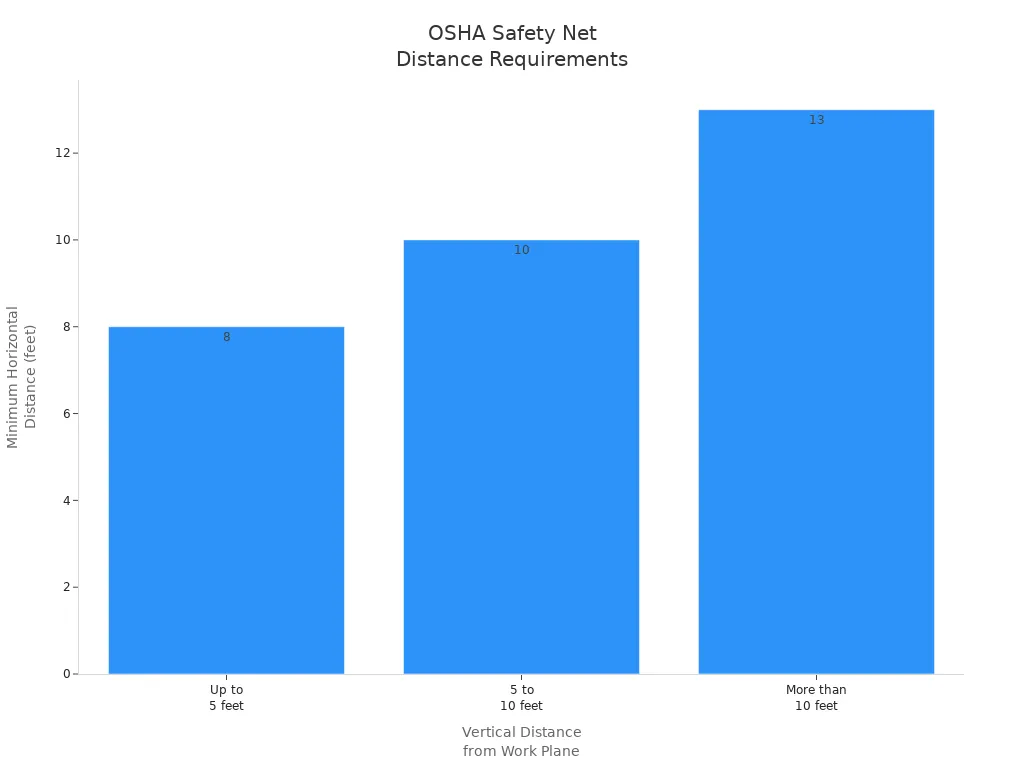
Note: You keep your team safe by following these rules. You make sure your safety plan meets OSHA standards for working up high.
Dropped object netting catches many things. You protect workers from falling wrenches, hammers, bolts, and nuts. You also stop bigger things like pipes or small equipment from dropping. You use netting to block debris and loose stuff that might fall when working up high.
You make working up high safer by using netting where tools and materials move a lot. You add more safety by catching things before they hurt someone. You help stop injuries and keep your worksite safe.
Dropped object netting helps keep people safe in many jobs. You see these nets where things can fall and hurt someone. The table below shows where dropped object netting is used most:
Industry | Description |
|---|---|
Energy | Oil and gas sites, wind farms, and power plants use netting for safety. |
Construction | Building sites use netting to stop falling objects from hurting people or property. |
Manufacturing | Factories use netting to protect workers from equipment above and moving parts. |
Transportation | Airports, train yards, and shipping centers use netting where people work up high. |
Construction sites have many dangers. Dropped object netting helps you stay safe in these ways:
Loose Construction Materials: Wood, metal, or tools can fall. Netting stops these things from hitting people.
Loose Tools And Equipment: Tools can slip from hands or belts. Netting catches them before they hit the ground.
Existing Deterioration: Old bridges or buildings can drop pieces during repairs. Netting protects everyone below.
People And Personnel: Workers can fall through open spaces. Special netting can catch a person and stop serious injury.
You can use dropped object netting with debris nets. This gives extra protection from dust, small parts, and bigger items.
Oil rigs and energy plants are tough places to work. Dropped object netting keeps you safe from falling tools, pipes, and fittings. You wrap netting around platforms, walkways, and scaffolding. This stops accidents when you move equipment or do repairs up high. Debris nets block smaller items and help keep the site clean.
Factories have cranes, conveyors, and storage racks above. Dropped object netting stops bolts, tools, or machine parts from falling on workers or machines. You keep your team safe and help production run smoothly. You can add debris nets to catch dust or small scraps. This makes your workspace even safer.
Tip: You make your workplace safer by using both dropped object netting and debris nets. This protects everyone from falling objects, big or small.
Dropped object prevention helps keep your worksite safe. When you use netting, you stop tools and materials from falling. This lowers injuries and fatalities at work. Every year, dropped objects cause many accidents. You can block falling items before they hurt someone below. Dropped object prevention works best with other safety systems. You protect your team by catching things that slip or get knocked loose.
Tip: Check your netting often. Regular checks help you find damage and keep your dropped object prevention strong.
Dropped object prevention does more than keep people safe. It also helps keep your work area clean and neat. When you stop things from falling, you avoid mess and confusion. This helps everyone focus and avoid distractions that could cause fatalities.
Dropped object prevention keeps your equipment safe. It stops tools, bolts, and machine parts from breaking expensive gear below. You avoid repairs and save time. Using netting keeps machines running and helps prevent fatalities from equipment failure.
You must follow safety rules to keep your workplace safe. OSHA says you need dropped object prevention systems. The table below shows some important rules:
OSHA Regulation | Description |
|---|---|
1910.29(f)(1) | Employers must protect against fall and falling object hazards. |
1910.29(a)(1) | All fall protection systems must meet certain criteria. |
1910.29(a)(2) | Fall protection systems must be set up before work starts. |
Dropped object prevention helps you follow these rules. You avoid fines and keep your business running well. You show your team you care about their safety and want to prevent fatalities.
You save money and time by using dropped object prevention. The table below lists some benefits:
Benefit | Description |
|---|---|
Increased Safety | Adds extra protection to stop dropped objects from causing injury or damage. |
Compliance | Makes sure you follow rules that require safety systems. |
Cost-Effective | Stops big costs from dropped objects, so it saves money over time. |
Increased Efficiency | Cuts downtime and stops damage to equipment by preventing dropped objects. |
You make your workplace safer and more efficient with dropped object prevention. You lower the risk of fatalities and protect your assets every day.
You need to follow clear steps when you install dropped object nets. Good planning helps you keep your safety program strong. Start by looking at the area where you want to use dropped object nets. Check for hazards and measure the space. Make sure you know how strong the net must be. Remove any debris or obstacles before you begin. Secure all attachment points so the net will hold up under stress.
Next, assemble the net. Always follow the manufacturer's instructions for dropped object nets. Attach the net to strong structures that can support the load. Adjust the tension so the net stays tight and does not sag. Test the net after you finish. Check for any weak spots or loose connections. This process keeps your safety program effective and protects everyone on site.
Tip: Careful planning and setup help you avoid mistakes. You make your worksite safety plan stronger by following these steps.
You must check dropped object nets often to keep your safety program working. Inspect all items at height before each use. Look for damage, wear, or corrosion. Make sure the net can handle the weight of anything that might fall. Test the net to see if it can take a shock load.
After bad weather, check the net for damage. Write down your inspections in a log. This helps you track the condition of your dropped object nets. If something falls into the net, remove it from service. Test or replace the net before you use it again. Weekly checks are a good practice in most places. Regular inspections keep your safety program strong and help you meet worksite safety rules.
Inspect before each use
Check after storms or heavy winds
Log every inspection
Remove and test nets after a fall
You must follow safety standards when you use dropped object nets. These rules help you keep your safety program up to date. The ANSI/ISEA 121-2023 standard gives you the minimum requirements for design, testing, and performance. You also need to use active controls like tool tethers and containers as part of your safety program.
Safety Standard | Description |
|---|---|
ANSI/ISEA 121-2023 | Sets rules for dropped object prevention solutions. |
Active Controls | Includes anchors, tool attachments, tethers, and containers. |
OSHA rules say you must inspect dropped object nets every week. You should also check them before each use and after any big event. Keeping good records helps you show that your safety program meets all rules. You protect your team and your business by following these practices.
Note: Dropped object nets are a key part of your safety program. You keep everyone safe and avoid fines by following the right standards.
You protect workers at heights by using dropped object netting. This netting stops objects from falling from heights and causing injuries. You see it in construction, wind turbines, and offshore jobs where heights create risks. The nets use strong, flame-retardant materials to handle tough conditions at heights. OSHA lists dropped objects as a top danger for workers at heights. Every 11 minutes, a worker at heights gets hurt by a falling object. You lower these risks by choosing the right netting for heights and checking it often. Safety managers should inspect nets, train teams, and follow all rules for heights. You can talk to safety experts for help with heights and site needs. Regular checks and the right netting keep everyone safe at heights.
Dropped objects are things that fall from high places. These can be tools or materials. They can hurt people or break equipment. Stopping dropped objects helps keep everyone safe. Good protection keeps your team safe every day.
Dropped object netting works like a shield. It catches things before they hit workers below. You do not need to tie every tool. The netting covers big areas and keeps people safe. This makes your worksite safer.
Put dropped object netting under walkways and scaffolding. Use it around cranes and platforms too. Place netting over busy work zones. This stops things from falling in risky spots. You keep everyone safe by blocking dropped objects.
Check dropped object netting before you use it. Inspect it every week and after storms. Regular checks help you find damage fast. Fix problems right away to keep protection strong. This habit helps stop injuries from dropped objects.
Dropped object netting catches most tools and materials. It gives strong protection for common dropped objects. Very heavy or sharp things might break through. Use extra safety controls for these risks. Always use netting with other safety tools for best results.


