
Views: 0 Author: Site Editor Publish Time: 2026-01-19 Origin: Site


Medical devices like surgical sutures and pacemaker leads
Electronics such as smartphone wiring and flexible circuits
Aerospace wiring harnesses and precision instruments
Filtration systems for water treatment and chemical processing
Jewelry with detailed and strong designs
Each place needs careful picking. For example, a Stainless Steel Wire gives accuracy in electronics. Fine stainless steel wire helps jewelry last longer. Remember, picking the right stainless steel wire starts with knowing what your application needs.
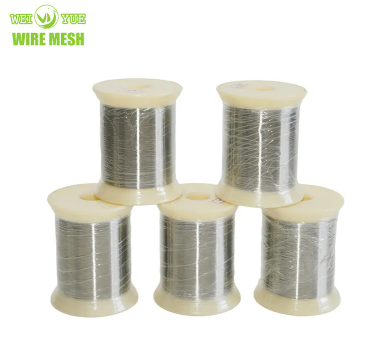
Know what your project needs before picking stainless steel wire. Think about things like how well it fights rust, how strong it is, and how much heat it can handle.
Pick the right stainless steel grade for where you will use it. Use 304 for most jobs. Use 316 for tough places like near saltwater or chemicals.
Pick the right wire gauge. Thick wires are strong. Thin wires bend more easily. Choose the gauge that fits your project.
Put safety and saving money first. Good wire helps stop accidents. It lasts longer and makes less waste.
Ask experts or look at guides if you are not sure. Use helpful resources to pick the best wire for your needs.
You want your project to last a long time. You also want it to work well. Picking the right stainless steel wire is important. Stainless steel wire is very tough. It does not rust easily. This helps your equipment work in hard places. It can be used in factories or outside. It does not break down fast.
Stainless steel wire is made from different metals. These metals make it stronger and last longer.
You can trust it for jobs in rough places.
Mesh count and wire gauge are important too. More mesh count means smaller holes. This helps with filtering things. You need to pick the right mesh size. If the holes are too small, things can get stuck. But you still want air or liquid to go through.
Picking the right material is very important in engineering. It changes how long your equipment works. It also changes how well it works. When you choose the best wire, your project does better. You can stop problems before they start.
Choosing the right stainless steel wire saves money. It also helps you work faster. Good wire lasts for many years. You do not need to buy new wire often. This means you do not stop working as much.
Evidence | Explanation |
|---|---|
Good wire lasts for years and does not break easily. | This means you do not have to stop work to fix things. You also save money. |
Wire EDM makes less waste than old ways of cutting. | Less waste saves money and uses materials better. This is good when materials cost a lot. |
Good wire keeps workers safe. | Cheap wire can break and hurt people. Strong wire helps keep everyone safe. |
You also make your workplace safer. Strong wire does not break easily. This means fewer accidents. Less waste helps you use your materials better. This is important when materials cost a lot. The wire you pick changes how your project turns out. It also changes how much you spend and how safe your team is.
Picking the right stainless steel grade is important. It helps your wire work well in your environment. There are many grades to choose from. The most used grade for wire mesh is 304 stainless steel. This grade is strong and does not rust easily. You see 304 stainless steel mesh in food factories, electronics, and buildings. It is good for filtering air, water, and oil. You also find it in jewelry and car parts. 304 stainless steel has 18% chromium and 8% nickel. These make it strong and useful for many things.
You use 304 stainless steel wire when you want good quality and a fair price. It does not rust in most indoor places. People use it for circuit boards, seatbelt springs, and decorations. You also see it in mining and medicine. It is safe for food and drinks because it meets FDA rules.
Tip: Pick 304 stainless steel wire mesh for most filters and support jobs.
You pick 316 stainless steel wire for tough places. This grade has molybdenum, which helps it fight rust better. You use 316 stainless steel mesh near the sea, in chemical plants, and in salty places. It can handle saltwater, chlorides, and strong cleaners.
Molybdenum makes 316 stainless steel mesh great for chemicals and outdoor use.
You see 316 stainless steel cable ties on boats and near the ocean.
316 stainless steel wire rope is good for chemical factories.
Feature | 304 Stainless Steel | 316 Stainless Steel |
|---|---|---|
Molybdenum Content | No | Yes (2%) |
Corrosion Resistance | Moderate | High (especially against chlorides) |
Cost | Lower | Higher (up to 40% more) |
Sometimes you need other stainless steel grades for special jobs.
430 stainless steel fights oxidizing acids and is used in chemical tools and food pipes.
410 stainless steel is strong and used for springs and cutting tools.
2205 duplex stainless steel is very strong and does not crack easily.
Grade 321 stainless steel wire mesh can take heat up to 1,500 °F and stays strong in the cold.
Note: Always pick the right stainless steel grade for your job. Use grade 321 for high heat. Pick 430 or 2205 duplex stainless steel for strong acids.
When you pick stainless steel wire, you must think about a few things. The wire needs to fit your job and where you use it. This part will help you choose the right wire by explaining each important point.
Corrosion resistance is very important. If you use the wrong wire, it can rust fast. You should always think about where you use the wire. Saltwater can hurt metal quickly, so marine places need strong corrosion resistance.
Pick a grade like 316 stainless steel for salty or chemical places.
Make sure the wire design does not hold water or dirt.
Use coatings or finishes to protect the wire more.
Clean and check the wire often to keep it strong.
If you work with food, medicine, or in the sea, focus on corrosion resistance. For decoration, you want the wire to look nice for a long time. In factories, you need the wire to last and be safe.
Tip: Always check if your place has chemicals, salt, or water. These things make corrosion happen faster.
Mechanical strength means how much force the wire can take before breaking. You need to match the wire’s strength to your job. Bridges and machines need strong wire. Jewelry and electronics need wire that bends easily.
Stainless steel wire can stretch without snapping.
In medical tools, bending is as important as strength. Guidewires and catheters must bend but not break.
Stainless steel wire is good for medical tools because it is safe and flexible.
Look at the wire’s strength and how much it can bend. Some jobs need strong wire. Others need wire that moves easily. If you need both, pick wire that is strong and flexible.
Temperature resistance is another big point. Some jobs need wire that works in hot or cold places. Both 304 and 316 stainless steel wire can handle heat up to 1600°F for short times and 1700°F for longer times. This makes them good for ovens and engines.
Heat resistance helps wire keep its shape and strength.
If you work in very hot or cold places, pick wire that can handle it.
Note: Always check the highest temperature your wire will face. Using the wrong wire can make it fail.
Wire gauge means how thick or thin the wire is. The gauge you pick changes how strong the wire is and how you use it. Thick wires are stronger and last longer in tough places. Thin wires are lighter and easier to shape but need careful handling.
Gauge (BWG) | Wall Thickness (inches) | Wall Thickness (mm) |
|---|---|---|
22 | 0.028 | 0.71 |
20 | 0.035 | 0.89 |
18 | 0.049 | 1.24 |
16 | 0.065 | 1.65 |
14 | 0.083 | 2.11 |
12 | 0.109 | 2.77 |

Wall thickness changes how strong the wire is. Heavy gauges like 12 or 14 are stronger and resist hits better. These are good for building things. Thick wires also fight corrosion better and last longer in hard places. If you need to weld the wire, thin wires can get damaged more easily.
You also need to pick between solid and stranded wire. Here is a quick look:
Feature | Solid Wire | Stranded Wire |
|---|---|---|
Flexibility | Not very flexible, good for things that do not move | Very flexible, good for things that move a lot |
Durability | Lasts longer in places that do not move | Lasts longer when bent or moved often |
Conductivity | Lower resistance, good for high-current jobs | Good for low current and short distances |
Applications | Best for home wiring and things that stay put | Best for cars, robots, and things that move |
Heat Resistance | Good for high current loads | Can take some heat but not for long high current |
Tip: Use stranded wire for jobs that move a lot, like robots or cars. Use solid wire for things that stay in one place.
Magnetic properties matter for some jobs, like electronics. Austenitic stainless steel is usually not magnetic, but it can become a little magnetic after working or welding. Ferritic and martensitic stainless steels are magnetic and work well in cars or kitchen tools.
Austenitic stainless steel: Not magnetic, good for electronics.
Ferritic stainless steel: Magnetic, used in cars and kitchen tools.
Martensitic stainless steel: Very magnetic, used for knives and medical tools.
Duplex stainless steel: Has mixed magnetic properties.
How the wire looks is important too, especially for buildings and art. The finish on stainless steel can change how your project looks.
A shiny or brushed finish can make wire look nice in buildings or art.
Nice finishes matter most when design is important.
Note: For decoration, pick a finish that fits your style. For factories, focus on how strong and useful the wire is.
For salty or chemical places, pick stainless steel with strong corrosion resistance, like 316.
For medical tools, pick wire that is strong and bends easily.
For factory jobs, focus on strength and heat resistance.
For decoration, pick stainless steel that looks good and is strong enough for your design.
Industry rules like ASTM and ISO help you find good wire. These rules make sure your wire is strong and fights corrosion. Always check if your supplier follows these rules.
Key Consideration | Decorative Applications | Industrial Applications |
|---|---|---|
Material Grade | 304 stainless steel for mild places | 304 or 316 stainless steel for tough jobs |
Corrosion Resistance | Important for looking nice a long time | Very important for lasting and working well |
Structural Strength | Needs to be strong enough for your design | Needs to be very strong for safety |
Mesh Density | Changes based on how it looks | Changes based on filtering or building |
Aesthetic Appeal | Very important for looks | Not as important, focus on how it works |
Use this table to compare what you need for decoration or factory jobs. Always match the wire’s features to your job for the best results.
You can pick the right stainless steel fine wire by using some easy steps. First, think about how you will use the wire and where it will go. Next, choose which features are most important, like if it needs to fight rust or if it should be magnetic. If you do not know what to do, ask someone who knows more.
Before you buy, look at this checklist:
Check if the wire is safe for the body
Make sure it is strong and bends well
Look at the surface and any coatings
See if you can track and check the wire’s quality
Ask if you can change the wire to fit your needs
Make sure you can clean it with special methods
Find out if you can get the wire when you need it
If your project is hard, you can talk to these experts:
Company Name | Description |
|---|---|
Metal Resource Solutions | They make stainless steel fine wire for many uses and control its features. |
Precision Wire Technologies | They have many ways to make fine wire and focus on doing a good job. |
Carpenter Technology | They help you pick the best stainless steel for your job in different fields. |
Think about what you need and use this guide to help you pick the best wire for your job.
You should pick 316 stainless steel wire for outdoor jobs. It fights rust from rain and salt. This wire works well for fences, marine gear, and garden tools.
Use a wire gauge tool or check the label. Lower numbers mean thicker wire. For example:
Gauge | Thickness (mm) |
|---|---|
22 | 0.71 |
16 | 1.65 |
Yes! You can use 304 or 316 stainless steel wire for food. These grades meet food safety rules. Always clean the wire before use.
Some stainless steel wires are magnetic. 304 and 316 are usually not magnetic. Grades like 410 or 430 are magnetic. Check the grade before you buy.


