
Views: 0 Author: Site Editor Publish Time: 2026-01-07 Origin: Site


Stainless steel mesh is celebrated for its durability and versatility, widely used in various industries. Yet, a common question arises: how long does stainless steel mesh last? The lifespan depends on factors such as the material grade, environmental exposure, and maintenance. In this article, we’ll explore these elements to help you understand how to maximize the longevity of stainless steel mesh.
The grade of stainless steel is one of the most important factors influencing the lifespan of stainless steel mesh. Different grades have different levels of resistance to corrosion and wear, which directly affects how long the mesh will last in different environments.
● 304 Stainless Steel: This is one of the most common grades of stainless steel. It offers excellent corrosion resistance in most indoor and moderate outdoor environments. With proper care, 304 stainless steel mesh can last for over 50 years in non-extreme conditions.
● 316 Stainless Steel: For more demanding environments, such as marine or chemical applications, 316 stainless steel is often the best choice. This grade contains molybdenum, which provides superior resistance to saltwater and chemicals. In coastal or highly corrosive environments, 316 stainless steel mesh can last up to 70 years or more.
Choosing the right grade for your application is essential for maximizing the lifespan of your stainless steel mesh.
Stainless Steel Grade | Corrosion Resistance | Expected Lifespan | Common Applications |
304 | High | 50+ years | Kitchenware, architecture, automotive |
316 | Very High | 70+ years | Marine environments, chemical processing |
The environment where the stainless steel mesh is installed plays a significant role in determining its lifespan. Exposure to harsh conditions, such as high humidity, salt, chemicals, or extreme temperatures, can accelerate the deterioration process.
● Indoor Environments: In dry, indoor environments, stainless steel mesh can last indefinitely with little to no maintenance. The absence of moisture or corrosive agents significantly reduces the wear and tear on the material.
● Outdoor Environments: Stainless steel mesh used outdoors, especially in areas with high humidity, pollution, or extreme temperatures, may experience a reduction in lifespan. However, if the mesh is properly selected and maintained, it can still last for several decades.
● Marine and Coastal Areas: Areas exposed to saltwater and high humidity are particularly harsh on stainless steel. In coastal regions, corrosion can occur more rapidly, especially for lower grades like 304 stainless steel. In such environments, 316-grade stainless steel mesh is ideal, as it can withstand saltwater exposure for over 20 years with regular maintenance.
● Industrial and Chemical Environments: Stainless steel mesh used in factories or chemical plants is exposed to chemicals, acids, and high temperatures, all of which can shorten its lifespan. Proper selection of the mesh grade (such as 316L) and frequent maintenance are essential for longevity in these harsh conditions.
The size of the mesh and the thickness of the wire are other important factors that affect the lifespan of stainless steel mesh. A finer mesh or thinner wire may be more susceptible to damage over time, especially in applications where the mesh is exposed to mechanical stress, such as filtration or security barriers.
● Smaller Mesh Size: Fine mesh screens are often used for filtration purposes. While they offer excellent filtration capabilities, the smaller openings and thinner wires can be more prone to damage or wear if exposed to heavy loads or harsh environments.
● Larger Mesh Size: Coarse mesh, on the other hand, is more robust and can withstand physical stress better. It is typically used in applications such as safety barriers or industrial screens.
● Wire Thickness: Thicker wires contribute to stronger mesh, which is more resistant to physical wear and tear. For applications exposed to high traffic or mechanical impact, thicker wires will generally offer a longer lifespan.
Although stainless steel mesh is durable, regular maintenance is essential to maximize its lifespan. Routine inspections, cleaning, and protective treatments can help prevent corrosion, rust, or mechanical damage.
● Cleaning: Regular cleaning with mild detergent and warm water is crucial for preventing debris buildup, which can contribute to corrosion. Avoid harsh abrasive cleaners that can damage the mesh surface. After cleaning, ensure the mesh is thoroughly dried to prevent water stains or rust formation.
● Protective Coatings: Applying protective coatings, such as passivation, powder coating, or electro-polishing, can significantly extend the life of stainless steel mesh. These coatings provide an extra layer of protection against corrosion, making it more resistant to harsh environmental factors.
● Routine Inspections: Conduct regular inspections to identify signs of wear, corrosion, or damage. Promptly addressing issues like rust or deformation will prevent further deterioration and ensure that the mesh continues to perform effectively.

In indoor environments, where the mesh is not exposed to moisture, chemicals, or extreme temperatures, stainless steel mesh can last indefinitely. In applications like kitchenware, storage shelves, or decorative barriers, the mesh's lifespan is primarily determined by its grade and the level of maintenance it receives.
For instance, 304 stainless steel mesh can easily last over 50 years in an indoor environment with minimal maintenance, while 316 stainless steel, although more expensive, offers even better resistance in case of occasional exposure to moisture or chemicals.
Stainless steel mesh used outdoors typically lasts between 15 to 50 years, depending on environmental conditions. Mesh exposed to direct sunlight, rain, wind, or pollutants will experience wear over time. However, mesh in relatively mild climates can last several decades if properly maintained and chosen according to the environment.
For example, stainless steel mesh used for garden fences or outdoor decorative panels may last up to 20-30 years, while mesh used for industrial or agricultural purposes may experience a shorter lifespan if not adequately protected.
The harsh conditions of marine and coastal environments significantly reduce the lifespan of stainless steel mesh. Saltwater exposure leads to corrosion, especially for lower-grade meshes. In these environments, 316 stainless steel mesh is the best option, as it can withstand the corrosive effects of saltwater for 20+ years with regular maintenance. Without proper maintenance, even 316-grade mesh could be compromised, but with proper care, it can last up to 50 years or more.
In industrial settings where stainless steel mesh is exposed to chemicals, high temperatures, or heavy machinery, the lifespan varies significantly. Regular maintenance and the correct choice of mesh grade are vital to ensure long-lasting performance. For example, 316L stainless steel mesh can withstand harsh industrial environments for 30 to 70 years if properly selected and maintained.
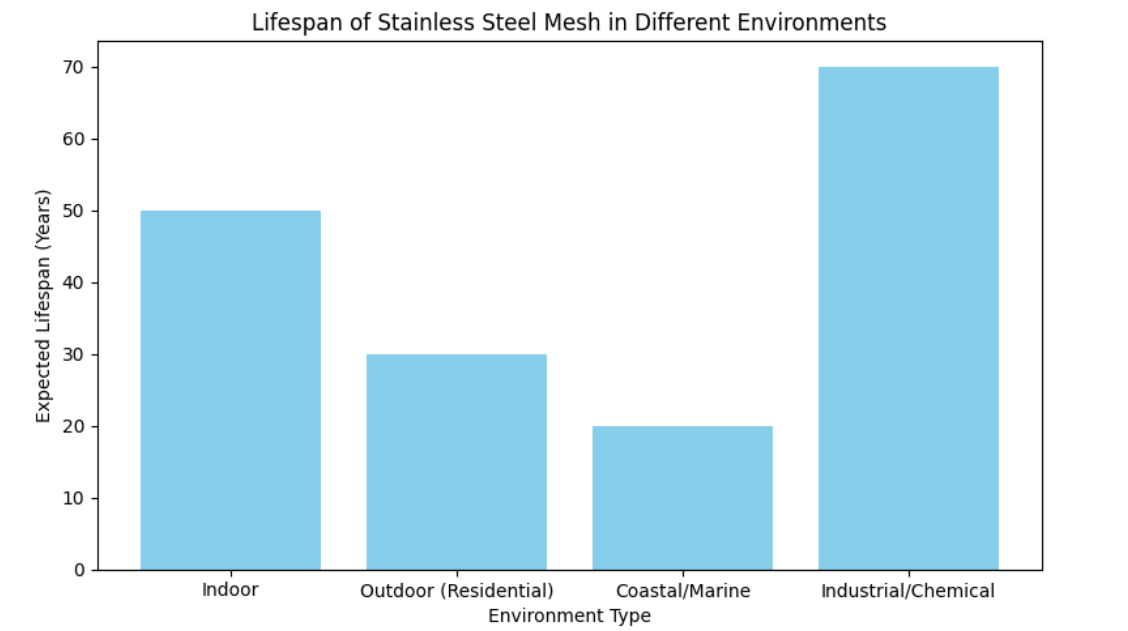
Environment Type | Expected Lifespan of Stainless Steel Mesh | Recommended Grade |
Indoor | 50+ years | 304 |
Outdoor (Residential) | 20-30 years | 304 or 316 |
Coastal/Marine | 20+ years | 316 |
Industrial/Chemical | 30-70 years | 316L |
Cleaning is one of the simplest yet most effective ways to maintain the integrity of stainless steel mesh. Regularly wash the mesh with mild detergent and water to remove dirt, dust, and corrosive substances. Dry it thoroughly after cleaning to prevent rust formation.
Applying protective coatings such as passivation or powder coating can help prevent corrosion and extend the lifespan of stainless steel mesh. These treatments improve the mesh’s resistance to environmental factors such as moisture, chemicals, and heat, ensuring long-term durability.
Selecting the appropriate grade and wire thickness is crucial to ensure the mesh lasts as long as possible. Consult with manufacturers or experts to choose the right type of stainless steel mesh based on the specific conditions of your application.
Maintenance Step | Recommended Action |
Cleaning | Use warm water and mild detergent. Avoid abrasive cleaners. |
Drying | Ensure the mesh is thoroughly dried after cleaning. |
Inspection | Perform regular checks for signs of wear or corrosion. |
Protective Coatings | Apply passivation, powder coating, or electro-polishing as needed. |
Stainless steel mesh is often used in architectural applications such as facades, security barriers, and decorative screens. In these applications, the mesh is expected to last between 25 and 100 years, depending on the environmental conditions and maintenance practices.
In industrial filtration systems, stainless steel mesh can last between 30 and 70 years, depending on the operational stresses and exposure to chemicals. Regular maintenance and the right selection of mesh grade can significantly extend its service life.
For security barriers, fences, and safety screens, stainless steel mesh can last between 10 and 50 years, depending on environmental factors and the quality of maintenance. Proper selection of mesh type (e.g., 316 stainless steel for coastal areas) can ensure long-lasting durability.
While galvanized steel is less expensive than stainless steel, its lifespan is much shorter, especially in corrosive environments. Galvanized steel may last 10 to 15 years in mild conditions, but stainless steel mesh, particularly 316-grade, can last 50 years or more in harsh environments.
Aluminum mesh is lighter and more cost-effective than stainless steel, but it is not as durable or corrosion-resistant. Stainless steel mesh outperforms aluminum mesh in terms of lifespan, especially in industrial or marine environments where corrosion resistance is critical.
In coastal areas, stainless steel mesh barriers made from 316-grade stainless steel have been in use for over 25 years without significant degradation. Regular maintenance, including cleaning and inspections, has helped maintain their integrity despite exposure to saltwater.
In an industrial filtration system, stainless steel mesh has been successfully used for over 30 years. The mesh, made from 316L stainless steel, has withstood exposure to chemicals and high temperatures, thanks to regular maintenance and the right choice of grade.
Stainless steel mesh used in architectural designs has proven to last for more than 50 years in both residential and commercial buildings. The mesh has maintained its aesthetic appeal and functionality with minimal maintenance, thanks to its corrosion-resistant properties.
The lifespan of stainless steel mesh depends on the grade, environmental conditions, and maintenance. With the right selection and regular care, it can last for decades. Stainless steel mesh is ideal for various uses, including security, industrial, and architectural applications. Products from Hebei Weiyue Wire Mesh Products Co., Ltd. offer excellent durability and value, ensuring long-term performance with minimal maintenance. Their high-quality mesh solutions are designed to meet the needs of diverse industries, providing reliability and strength for any project.
A: The lifespan of stainless steel mesh depends on the grade, environment, and maintenance. In ideal conditions, it can last for decades with minimal upkeep.
A: Key factors include the stainless steel grade, environmental exposure (e.g., salt, chemicals), and how well the mesh is maintained.
A: Yes, stainless steel mesh is highly durable for outdoor applications. Proper maintenance helps extend its lifespan even in harsh weather conditions.
A: Stainless steel mesh, especially grade 316, is highly resistant to saltwater corrosion, making it ideal for coastal and marine environments.
A: Regular cleaning with mild detergent and ensuring it stays dry are essential steps in maintaining stainless steel mesh and preventing rust or corrosion.
A: Yes, stainless steel mesh is generally more durable than galvanized steel, especially in corrosive environments, due to its superior resistance to rust.


